When a cow eats, millions of microbes inside the rumen get to work breaking down feed. These microbes rely on nitrogen, mainly in the form of ammonia, to grow and produce microbial protein, an important source of metabolizable protein for the cow.
But there is one important factor that often gets overlooked: timing.
It is not just about how much nitrogen is available, but how quickly it is released in the rumen.
What Happens with Conventional Urea?
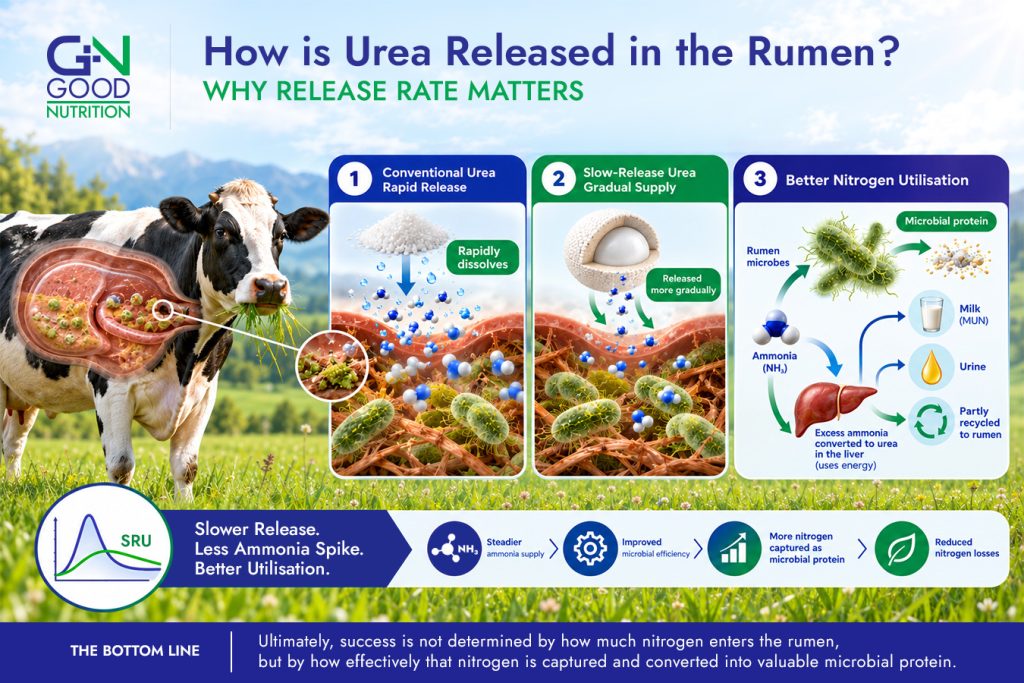
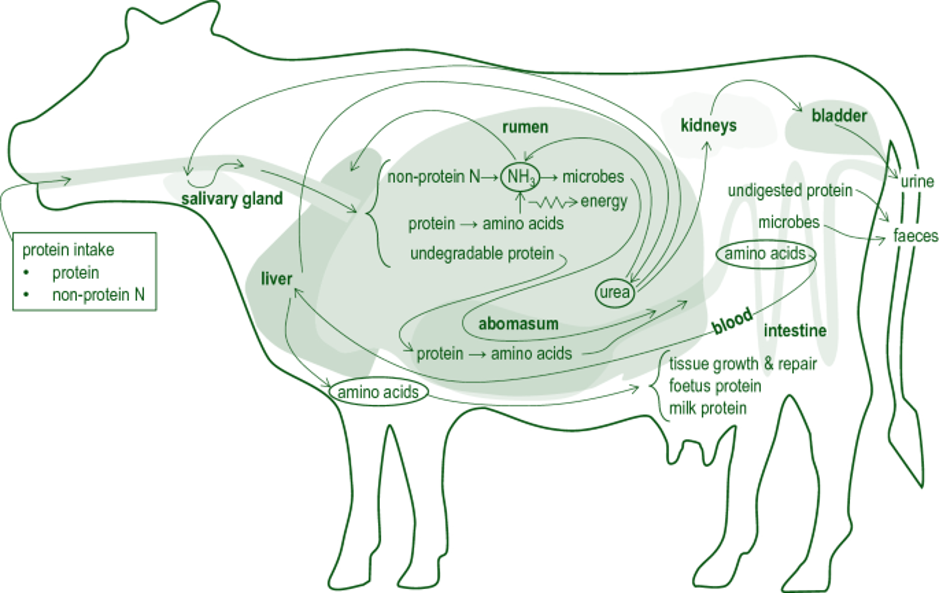
Conventional, or uncoated, urea dissolves and is rapidly hydrolysed once it enters the rumen. Urea hydrolysis can occur rapidly (within 20 minutes), often causing rumen ammonia concentration to rise soon after feeding.
As urea is hydrolysed, ammonia is rapidly released. After feeding, ammonia concentrations in the rumen typically rise sharply within the first hour. The timing of peak rumen ammonia depends on the diet and nitrogen source, but with feed-grade urea, the peak may occur within the first hour after feeding. This can create noticeable fluctuations in rumen ammonia levels after feeding.
The challenge is that rumen microbes can only use ammonia efficiently when adequate fermentable energy is available.
When ammonia is released faster than the microbes can capture, excess ammonia may accumulate in the rumen. Instead of being converted into microbial protein, part of the excess ammonia is absorbed through the rumen wall into the bloodstream.
Why Too Much Ammonia Is a Problem
Once ammonia enters the bloodstream, the liver converts it to urea because excessive ammonia concentrations can be toxic to the animal.
The liver converts the ammonia back into urea, a process that requires energy. This process uses energy that could otherwise support productive functions such as milk production, growth, reproduction, or body-condition maintenance.
Some of this newly formed urea can be recycled back into the rumen, giving the microbes another opportunity to use it. However, some nitrogen is ultimately excreted from the animal.
This nitrogen may be excreted:
Through urine.
In milk as milk urea nitrogen (MUN) in dairy cows.
Although urea is often thought of as a waste product, the story is more interesting in ruminants. Cattle can recycle part of this urea back into the rumen, where it can again provide nitrogen for microbial protein synthesis. Even so, nitrogen excreted through urine or milk represents nitrogen that was not captured for productive use.
How Slow Release Urea Changes the Picture
Slow-release urea (SRU) was developed to help to address this timing problem.
Rather than releasing ammonia as rapidly as conventional use, SRU is designed to supply ammonia more gradually. This may better match ammonia availability with microbial nitrogen demand and fermentable-energy supply.
In a study comparing feed-grade urea with slow-release urea in beef steers, conventional urea increased mean ruminal ammonia concentrations by 58% compared with slow-release urea (Taylor-Edwards et al., 2009).
In other words, SRU can slow ammonia release and reduce peak rumen ammonia concentrations when it replaces conventional urea.
By providing a steadier supply of nitrogen, SRU may improve the synchronization between ammonia availability and microbial demand. This may allow a greater proportion of the nitrogen to be captured and converted into microbial protein rather than being lost.
Better Timing Means Better Nitrogen Utilisation
Think of rumen microbes as workers on a construction site.
If all the building materials are delivered in one huge shipment at the start of the day, much of it sits unused and may even go to waste before the workers can use it.
However, if the materials arrive more steadily throughout the day, the workers can keep building with far less waste.
The same principle applies inside the rumen.
By releasing nitrogen more gradually, slow-release urea can help create a more consistent ammonia supply for microbial growth. When correctly formulated into a balanced diet, this may support more efficient nitrogen utilisation and reduced nitrogen losses.
Ultimately, success is not determined by how much nitrogen enters the rumen, but by how effectively that nitrogen is captured and converted into valuable microbial protein.
Slow-release urea should be used as part of a properly balanced ration and according to recommended inclusion rates.
Sources:
Taylor-Edwards, C. C., Hibbard, G., Kitts, S. E., McLeod, K. R., Axe, D. E., Vanzant, E. S., Kristensen, N. B., & Harmon, D. L. (2009). Effects of slow-release urea on ruminal digesta characteristics and growth performance in beef steers. Journal of Animal Science, 87(1), 200-208.https://doi.org/10.2527/jas.2008-0912
Mastitis remains one of the most costly and persistent diseases affecting dairy farms worldwide. Despite decades of improvements in milking hygiene, antibiotic treatments, and herd management, many producers continue to struggle with recurring infections, elevated somatic cell counts (SCC), reduced milk quality, and declining profitability.
The challenge today is not that mastitis cannot be treated. The challenge is that traditional approaches are increasingly being placed under pressure by changing regulations, rising costs, labor shortages, and growing concerns surrounding antimicrobial resistance.
As a result, dairy producers are beginning to look beyond treatment alone. Nutritional strategies that strengthen udder health and improve the cow’s natural resilience are becoming an important part of long-term mastitis management.
The Current Challenges Facing Dairy Farms
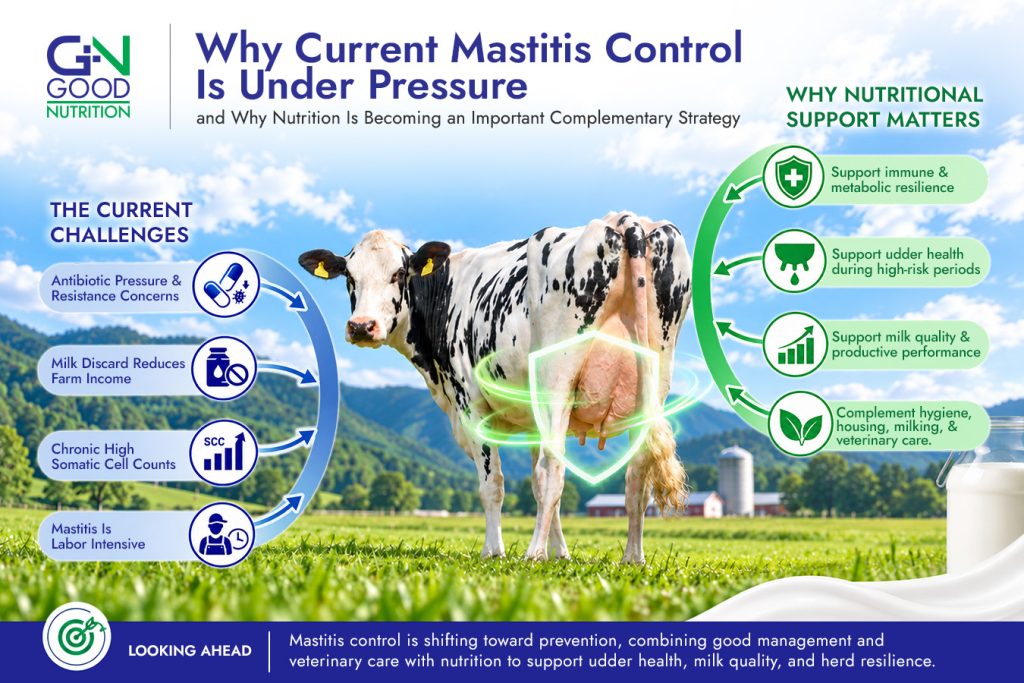
1. Antibiotic Pressure and Resistance Concerns
For many years, antibiotics have been one of the primary tools used to control mastitis. While they remain an important part of veterinary medicine, increasing global attention on antimicrobial resistance (AMR) is changing how antibiotics are used.
Many countries now encourage more responsible antibiotic use, especially in food-producing animals. This means dairy farmers are expected to reduce unnecessary treatments while maintaining animal health and milk quality.
Inappropriate or repeated antimicrobial use can contribute to antimicrobial-resistance concern, reinforcing the need for responsible, veterinary-guided use. Consumers are increasingly aware of these issues and are demanding milk that is produced using responsible antimicrobial practices.
The industry is therefore shifting toward prevention rather than relying solely on treatment after infection has already occurred.
2. Milk Discard Reduces Farm Income
One of the hidden costs of mastitis is discarded milk.
Whenever a cow receives antibiotic treatment, her milk often cannot be sold until the withdrawal period has ended. Even though the cow continues producing milk, that milk becomes an economic loss to the farm.
The financial impact includes:
Lost milk sales
Additional treatment costs
Increased labor
Reduced production efficiency
For farms with frequent mastitis cases, these losses accumulate quickly and significantly reduce overall profitability.
Preventing infections before treatment becomes necessary helps preserve milk yield while reducing unnecessary waste.
3. Chronic High Somatic Cell Counts (SCC)
Somatic Cell Count is one of the most important indicators of udder health.
A consistently elevated SCC often indicates that inflammation or infection remains present within the udder, even when no obvious clinical signs are visible.
Chronic high SCC can result in:
Lower milk quality
Reduced milk production
Lower processing performance
Financial penalties from milk processors
Increased risk of future clinical mastitis
Many farms experience recurring SCC problems despite following standard hygiene protocols. This highlights the need to review the full herd-health program, including milking management, housing, transition-cow management, nutrition, and veterinary oversight. Improving the cow’s own immune function and resilience has become an increasingly important part of reducing chronic SCC.
4. Mastitis Is Labor Intensive
Managing mastitis requires significant time and manpower.
Every case involves multiple additional tasks, including:
Identifying affected cows
Separating infected animals
Administering treatments
Recording treatments
Discarding milk
Monitoring recovery
Cleaning and disinfecting equipment
On farms already facing labor shortages, these additional responsibilities place considerable pressure on daily operations.
Reducing the number of mastitis cases helps improve overall labor efficiency while allowing staff to focus on other important areas of herd management.
Why Additional Nutritional Support Matters
Excellent hygiene, proper milking procedures, vaccination programs, and veterinary care remain the foundation of mastitis control.
However, today’s production systems place considerable stress on dairy cows.
High milk production, metabolic demands, heat stress, transition periods, and environmental challenges can all reduce the cow’s ability to defend herself against invading pathogens.
This is where nutrition becomes an important complementary strategy.
Rather than replacing existing mastitis management programs, nutritional interventions aim to strengthen the cow’s natural defenses and improve resilience from within.
Supporting immune function, gut health, antioxidant status, and nutrient utilization may help strengthen overall resilience and support udder health as part of a complete herd-health program.
Prevention Alongside Timely Treatment
Modern dairy farming increasingly focuses on prevention.
Instead of waiting until infection occurs, producers are investing in nutritional strategies that help cows remain healthier throughout lactation.
Preventive nutritional approaches may help:
Support immune and metabolic resilience
Support udder health during high-risk periods, particularly transition and early lactation
Support milk quality and productive performance
Complement hygiene, milking routines, housing, and veterinary-led mastitis-control programs
These benefits complement existing herd health programs rather than replacing veterinary treatments when they are required.
Nutrition Is Becoming a Strategic Tool
Advances in animal nutrition have introduced a range of functional feed additives designed to support dairy cow health.
Nutritional programs may include ingredients intended to support immune function, gut integrity, nutrient absorption, antioxidant status, and metabolic efficiency.
By improving the cow’s ability to cope with production stress and pathogen exposure, nutritional support can contribute to better long-term herd performance.
The goal is no longer simply treating mastitis. It is building cows that are naturally more resilient.
Looking Ahead
Mastitis will likely remain one of the dairy industry’s greatest challenges. However, the way producers manage the disease is evolving.
Increasing antibiotic pressure, milk losses, chronic SCC issues, and labor constraints are encouraging farms to adopt broader, more proactive strategies.
Nutrition is increasingly recognised as an important complementary pillar alongside good management, biosecurity, milking hygiene, and veterinary care.
Modern dairy systems can benefit from nutritional strategies designed to support udder resilience, milk quality, and productivity throughout their lactation.
By combining sound management with targeted nutritional support, dairy producers can move beyond simply treating mastitis and begin building healthier, more resilient herds for the future.
Nutritional strategies should complement, NOT REPLACE, good milking hygiene, appropriate housing, routine monitoring, veterinary diagnosis, and treatment protocols.
When evaluating a lysolecithin product, lysophosphatidylcholine (LPC) is one important component to consider alongside the overall lysophospholipid profile, product consistency, physical form and relevant animal-performance data.
Many feed additives are marketed simply as “lysolecithin”, but lysolecithin products can differ substantially in composition, source, processing, physical characteristics and intended application. LPC concentration is a useful compositional and quality-control indicator, but it should be interpreted together with the full lysolecithin profile, the feed formulation, application conditions, and animal-performance evidence. This is why researchers, nutritionists, and quality manufacturers pay close attention to LPC levels rather than focusing only on the total amount of lysolecithin when comparing products.
Understanding why LPC matters begins with understanding what happens during the production of lysolecithin.
Lysolecithin Is a Mixture, Not a Single Ingredient
Lysolecithin is generally produced by enzymatic treatment of lecithin using phospholipase enzymes. During hydrolysis, phospholipase removes one fatty acid from some phospholipid molecules, producing lysophospholipids and changing the overall phospholipid profile.
Depending on the lecithin source and enzymatic process, lysolecithin may contain varying proportions of:
Lysophosphatidylcholine (LPC)
Lysophosphatidylethanolamine (LPE)
Lysophosphatidylinositol (LPI)
Lysophosphatidic acid (LPA)
Residual phospholipids and other lipid fractions
Each of these molecules has unique biological properties, but LPC has consistently received the greatest scientific attention because of its superior surface-active characteristics and its significant role in lipid digestion and nutrient absorption.
For this reason, the LPC concentration is often used as one compositional marker when assessing the quality and consistency of lysolecithin products.
Why LPC Is Important
LPC possesses a unique molecular structure that gives it useful surface-active properties and enables it to contribute to lipid emulsification. Unlike conventional phospholipids such as phosphatidylcholine, LPC contains one fatty acid chain rather than two. This seemingly small structural difference dramatically changes how the molecule behaves at the interface between water and fat.
As part of a lysolecithin system, LPC can contribute to:
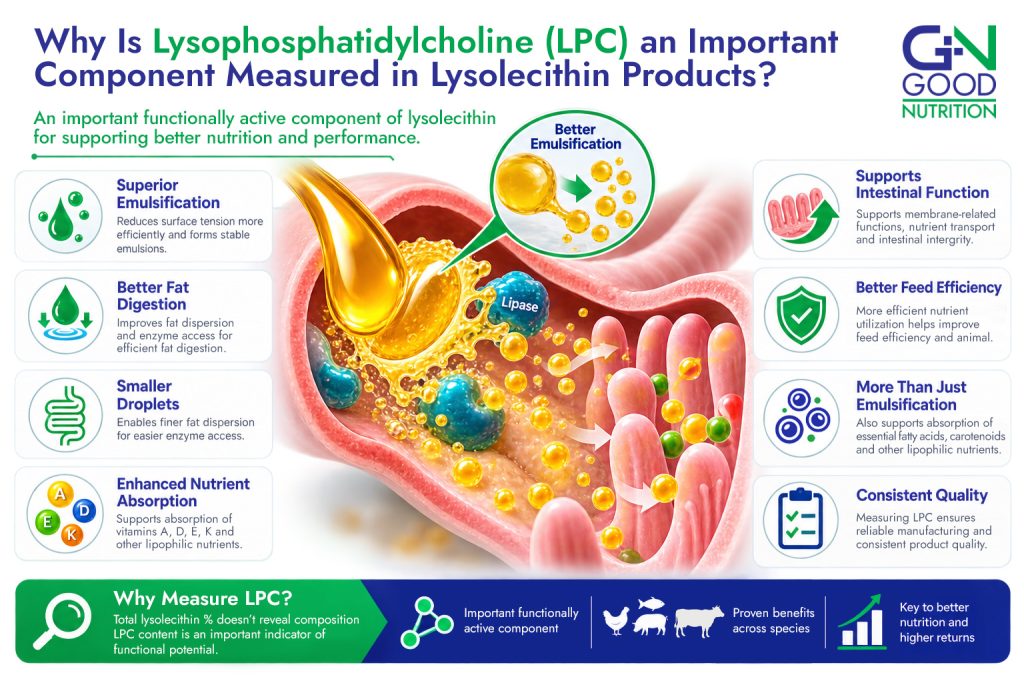
Supporting the emulsification of dietary fats and oils
Interacting at oil-water interface due to its amphiphilic structure
Participating in mixed-micelle systems with bile salts and products of lipid digestion
Helping maintain the solubility and transport of lipid-digestion products in the intestinal environment
Supporting the intestinal handling of fats and other lipophilic nutrients
Together, these properties may support more efficient digestion and absorption of dietary lipids, helping animals make better use of energy supplied by the diet.
Mixed Micelles Support Lipid Absorption
One of LPC’s greatest advantages is its ability to participate in mixed-micelle systems formed in the small intestine Mixed micelles are small lipid-containing structures formed from bile salts, fatty acids, monoglycerides, phospholipids, lysophospholipids, cholesterols, and other lipid-digestion products.They help transport these lipids through the aqueous intestinal environment e towards the absorptive surface. The composition and stability of mixed micelles can influence the solubilization and intestinal availability of lipid-digestion products.
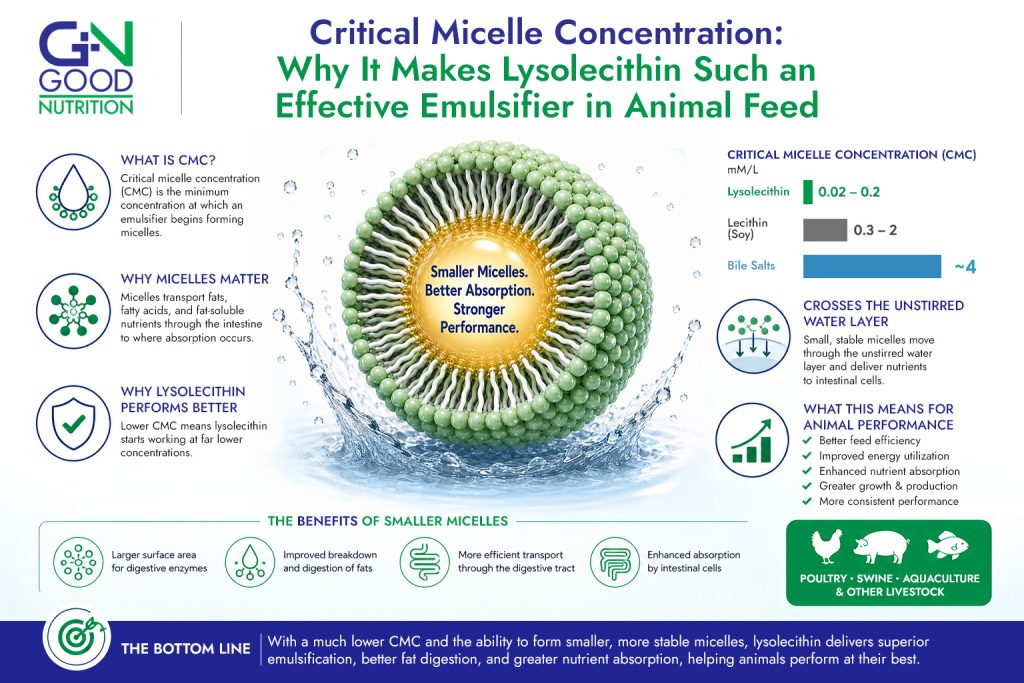
Research has reported that LPC has a low critical micelle concentration (CMC), approximately 0.02 to 0.2 mM/L, compared with around 4 mM/L for selected bile salts. This property supports its role in intestinal mixed-micelle formation and efficient lipid utilization.
By supporting emulsification and mixed micelle formation, lysophospholipids may help maintain conditions favorable for continued lipid digestion and absorption.
This is one of the main reasons lysolecithin supplementation has been associated with improved fat utilization across poultry, swine, ruminants, and aquaculture diets; however, the response depends on species, production stage, dietary fat source, and feeding conditions. .
More Than Just Fat Digestion
Although LPC is widely recognized for improving fat digestion, its benefits extend beyond emulsification alone.
Scientific studies have demonstrated that LPC may also help improve the absorption of:
Fat-soluble vitamins (A, D, E, and K)
Essential fatty acids
Carotenoids
Other lipophilic nutrients
Improved nutrient absorption means animals are better able to utilize the nutrients already present in the diet, it may contribute to better feed efficiency without increasing feed intake.
LPC and Intestinal Function: An Emerging Area
An additional reason LPC receives so much attention is its interaction with the intestinal membrane.
Because LPC is structurally related to naturally occurring phospholipids found in cell membranes, it may interact with the intestinal lining in ways that influence nutrient transport and intestinal function.
Research suggests that lysophospholipids, including LPC, may help:
Support membrane fluidity and cellular function
Influence nutrient transport across intestinal cells
Support intestinal integrity
Promote efficient digestion and absorption
While these mechanisms continue to be studied, they may provide an additional explanation for performance responses observed with lysolecithin products under appropriate feeding conditions.
Why Total Lysolecithin Percentage Is Not the Full Picture
Two products may both claim to contain “50% lysolecithin,” yet perform very differently in the field.
Total lysolecithin percentage does not fully reveal the composition of the lysophospholipids within the product.
One product may contain a higher proportion of LPC, while another may contain different proportions of other lysophospholipid fractions.
Because LPC contributes to the surface-active and emulsifying characteristics of lysolecithin, products with identical total lysolecithin percentages may not necessarily produce the same practical response.
This is why reputable manufacturers may specify LPC content, together with other relevant product specifications, rather than relying solely on total lysolecithin claims.
Measuring LPC Supports Quality Control
Feed manufacturers require products that deliver consistent quality from batch to batch.
Measuring LPC helps support:
Consistent raw material quality
Reliable manufacturing standards
Predictable product performance
Better formulation accuracy
Rather than treating lysolecithin as a generic ingredient, measuring LPC provides a quantifiable indicator of product composition and functional quality.
Together with relevant animal-performance data, this gives nutritionists greater confidence when formulating diets and evaluating return on investment.
What Should Nutritionists Look For?
When comparing lysolecithin products, asking only “How much lysolecithin is included?” is no longer enough.
More useful questions include:
What is the LPC concentration and overall lysophospholipid profile?
How is the LPC measured?
Is the LPC content consistent between production batches?
Is the product supported by relevant animal-performance data?
These questions help distinguish high-quality, scientifically formulated products from those that simply carry the lysolecithin label.
A Practical Perspective
Not all lysolecithin products deliver the same practical response. .
Lysophosphatidylcholine (LPC) is measured because it is an important functional component within lysolecithin. Its unique structuresupports emulsification and participation in mixed-micelle systems, which can help support nutrient absorption and efficient fat digestion.
By considering LPC together with total lysolecithin content, the overall lysophospholipid profile, and relevant animal-performance data, nutritionists and feed manufacturers gain a clearer understanding of a product’s functional potential.
As animal nutrition continues to emphasize feed efficiency, nutrient utilization, and return on investment, LPC remains a meaningful compositional and quality indicator when selecting a lysolecithin feed additive.
Every kilogram of feed is an investment. The more efficiently a cow converts that feed into milk or meat, the greater the return for the farmer. A key part of that efficiency comes from the billions of microorganisms living inside the rumen.
Understanding how these microbes use nitrogen helps explain why Slow Release Urea (SRU) is gaining attention in modern ruminant nutrition.
The rumen: Nature’s fermentation chamber
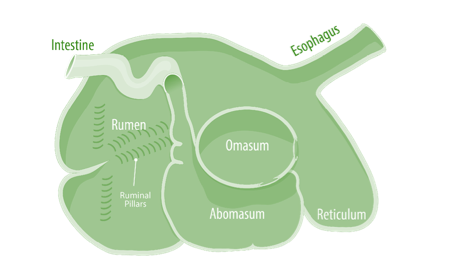
A common misconception is that cattle have four stomachs. In reality, they have one stomach divided into four specialized compartments: the rumen, reticulum, omasum and abomasum. Together, these compartments allow ruminants to digest fibrous feeds that monogastric animals cannot.
Of these four compartments, the rumen is by far the largest and most important.
In a mature dairy cow, the rumen can hold up to 150 litres, occupying nearly three quarters of the abdominal cavity. It acts as a large fermentation chamber where feed is continuously mixed with saliva and billions of microorganisms that break down plant material.
Unlike humans, cattle rely mainly on their rumen microbes rather than their own digestive enzymes to convert feed into usable nutrients.
Figure 1: Ruminant stomach.
Mississippi State University
Feeding the microbes first
Every time a cow eats, it is actually feeding an enormous microbial population living inside the rumen.
This microbial community includes bacteria, protozoa, anaerobic fungi and archaea. Together they form one of the most complex microbial ecosystems found in nature. Bacteria dominate this ecosystem, reaching populations of 10^10 to 10^11 cells per millilitre of rumen fluid.
Their job is to break down fibre, starch and other feed components into nutrients the animal can use.
During fermentation, they produce volatile fatty acids (VFAs), mainly acetate, propionate and butyrate. These VFAs become the cow’s primary energy source and support milk production, growth and overall productivity.
Nitrogen is just as important as energy
Energy alone is not enough for rumen microbes to grow.
Like all living organisms, they also require nitrogen to build proteins and reproduce.
Ruminants do not have a direct amino acid requirement in the same way humans do. Instead, they depend on a nitrogen supply that can be converted into microbial protein.
Rumen microbes break down dietary protein into ammonia and use this nitrogen, together with fermentable carbohydrates, to build microbial protein. Once these microbes leave the rumen, they are digested in the small intestine and become one of the animal’s most valuable sources of high quality protein. In fact, microbial protein supplies at least half of the building blocks needed for milk and meat production.
Timing makes all the difference
Providing nitrogen alone is not enough. Microbes also need an adequate supply of fermentable carbohydrates at the same time. Think of it like building a house. Nitrogen provides the bricks, while energy provides the workers who assemble them. Without workers, the bricks simply pile up and go unused.
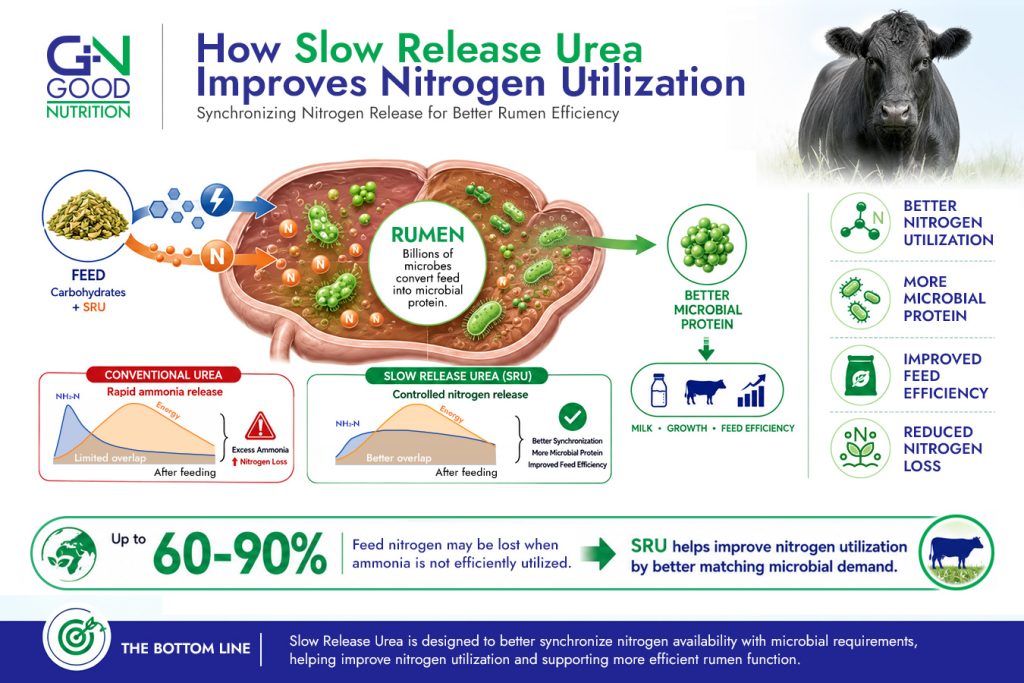
The same thing happens in the rumen. Nitrogen supply works well when energy is available at the same time. If nitrogen is released faster than microbes can use it, excess ammonia accumulates instead of being converted into microbial protein.
Feed-grade urea has long been used as a non-protein nitrogen source because rumen microbes do not distinguish between nitrogen from protein and nitrogen from urea. Approximately 90% of rumen bacterial species use ammonia as their primary nitrogen source, while cellulolytic bacteria rely exclusively on ammonia for growth.
However, conventional urea dissolves very quickly after entering the rumen.
An enzyme called urease, produced by rumen bacteria, rapidly converts urea into ammonia and carbon dioxide.
This process is extremely fast. Urease accelerates the reaction approximately 10^14 times faster than it would occur naturally, allowing most conventional urea to be hydrolysed within 30 minutes to two hours after feeding.
If sufficient fermentable energy is not available during this period, microbes cannot capture all of the released ammonia.
When ammonia goes unused
Ammonia that is not incorporated into microbial protein does not simply disappear.
Instead, it is absorbed through the rumen wall into the bloodstream, transported to the liver and converted back into urea.
Some of this urea is recycled back into the rumen through saliva or across the rumen wall, while the remainder is excreted in urine and faeces.
Research has shown that 60 to 90% of feed nitrogen may ultimately be lost through excretion, representing both an economic loss for the producer and an environmental concern.
How Slow Release Urea changes the equation
This is where Slow Release Urea offers a different nutritional approach.
Instead of releasing all its nitrogen immediately, SRU is designed to release ammonia gradually over time.
By slowing nitrogen release, SRU helps better match the availability of ammonia with the gradual release of energy from feed ingredients.
As a result, rumen microbes have more time to capture ammonia efficiently, produce microbial protein, improve nitrogen utilization and reduce nitrogen losses.
The objective is not to provide more nitrogen, but to improve how efficiently existing nitrogen is used.
Bringing it back to the farm
When rumen microbes work efficiently, the benefits extend throughout the production system.
Improved microbial protein synthesis can support better feed efficiency, more effective fibre digestion, improved utilization of dietary nutrients, reduced nitrogen losses and better overall performance.
For nutritionists, this means formulating diets that better synchronize nitrogen and energy supply.
For farmers, it means making better use of every kilogram of feed.
Key takeaways
The rumen is a highly specialized fermentation chamber powered by billions of microorganisms.
These microbes require both nitrogen and fermentable energy at the right time to produce microbial protein efficiently.
Conventional urea provides a rapid source of nitrogen, its fast release can lead to ammonia losses when microbial demand is exceeded.
Slow Release Urea is designed to better synchronize nitrogen availability with microbial requirements, helping improve nitrogen utilization and supporting more efficient rumen function.
When discussing fat digestion in animal nutrition, terms like emulsification, micelles, and critical micelle concentration (CMC) often appear in scientific literature. While these concepts may sound technical, they help explain why lysolecithin is used in feed to support nutrient utilization.
Understanding critical micelle concentration helps explain why lysolecithin can perform better than lecithin in some feeding situations, especially in young animals with immature digestive systems.
What Is Critical Micelle Concentration (CMC)?
Critical micelle concentration, or CMC, is the concentration at which amphiphilic molecules begin to self-associate into micelles.
Below the CMC, emulsifier molecules remain dispersed individually. Once the CMC is reached, they form micelles that can help solubilize lipids in the digestive system.
In simple terms, a lower CMC means micelles can form at lower concentrations.
This makes CMC one of the most important characteristics when evaluating the efficiency of an emulsifier.
Why Are Micelles Important?
Micelles play a crucial role in fat digestion and nutrient absorption.
After dietary fats are broken down, they are incorporated into mixed micelles to move through the watery environment of the intestine. These tiny carriers transport fatty acids, monoglycerides, fat-soluble vitamins, and other lipophilic nutrients to the intestinal surface, where absorption takes place.
Without efficient micelle formation, valuable nutrients may pass through the digestive tract without being fully absorbed.
Why Lysolecithin Performs Better
One of the reasons lysolecithin is considered an effective emulsifier is its relatively low critical micelle concentration.
Research shows that lysolecithin has a CMC of 0.02 to 0.2 mM/L, compared with approximately 4 mM/L for bile salts, although reported values vary by composition and measurement method. This means lysolecithin can begin forming micelles at concentrations 20 to 200 times lower than bile, allowing it to work far more efficiently.
Compared with conventional phospholipids such as soy lecithin, which have a CMC of 0.3 to 2 mM/L, lysolecithin generally demonstrates greater emulsifying power.
As a result, the emulsification capacity of lysolecithin is approximately five times greater than standard lecithin, making it a highly effective exogenous emulsifier for animal feed.
Smaller Micelles Mean Better Fat Digestion
The benefits of lysolecithin extend beyond simply forming micelles quickly.
It may also contribute to the formation of smaller mixed micelles, and micelle size can influence the digestion and absorption of fats and other fat-soluble nutrients.
Smaller mixed micelles provide several important advantages:
They can increase the interfacial area available for digestion.
They may support more efficient fat digestion.
They can facilitate nutrient movement through the intestinal environment.
They may improve the delivery of fat-soluble compounds to the intestinal surface.
Simply put, smaller micelles allow animals to extract more nutritional value from every kilogram of feed.
Crossing the Unstirred Water Layer
Before nutrients can enter the intestinal cells, they must first pass through a thin barrier known as the unstirred water layer.
This layer acts as one of the final obstacles between digested nutrients and absorption.
Small, more stable mixed micelles may move through this layer more easily than larger micelles. Once they reach the intestinal surface, they help deliver fatty acids, monoglycerides, and fat-soluble nutrients for absorption by enterocytes.
Micelle size may also influence how efficiently nutrients are taken at the intestinal surface. Smaller micelles generally result in more effective nutrient delivery and improved absorption.
What This Means for Animal Performance
More efficient emulsification and smaller micelles can contribute to better utilization of dietary fat.
Improved fat digestion may help animals extract more energy from the same feed while supporting the availability of fat-soluble vitamins and other lipophilic nutrients.
These improvements can contribute to:
Potentially better feed efficiency.
Improved energy utilization.
Enhanced nutrient absorption.
Potential support for growth and production performance.
Consistent performance, particularly in young animals whose natural bile production is still developing.
The Bottom Line
Critical micelle concentration is more than just a laboratory measurement. It is a practical indicator of how efficiently an emulsifier performs inside the animal.
Because lysolecithin generally shows a lower critical micelle concentration than conventional lecithin, it can support micelle formation fat digestion more effectively in some feeding conditions.
This unique property is one of the key reasons lysolecithin is used as a valuable nutritional tool to support feed efficiency, dietary energy utilization, and animal performance across poultry, swine, aquaculture, and other livestock species.
This 2026 global mastitis cost overview summarizes published economic analyses and control-strategy studies from 2020-2025. It is not a new model, but a consolidated view of what peer-reviewed research and extension work currently show about the economic burden of mastitis.
Economic Impact on Dairy Farmers by Region
📊 Global Overview
Metric
Value
Total Global Annual Cost
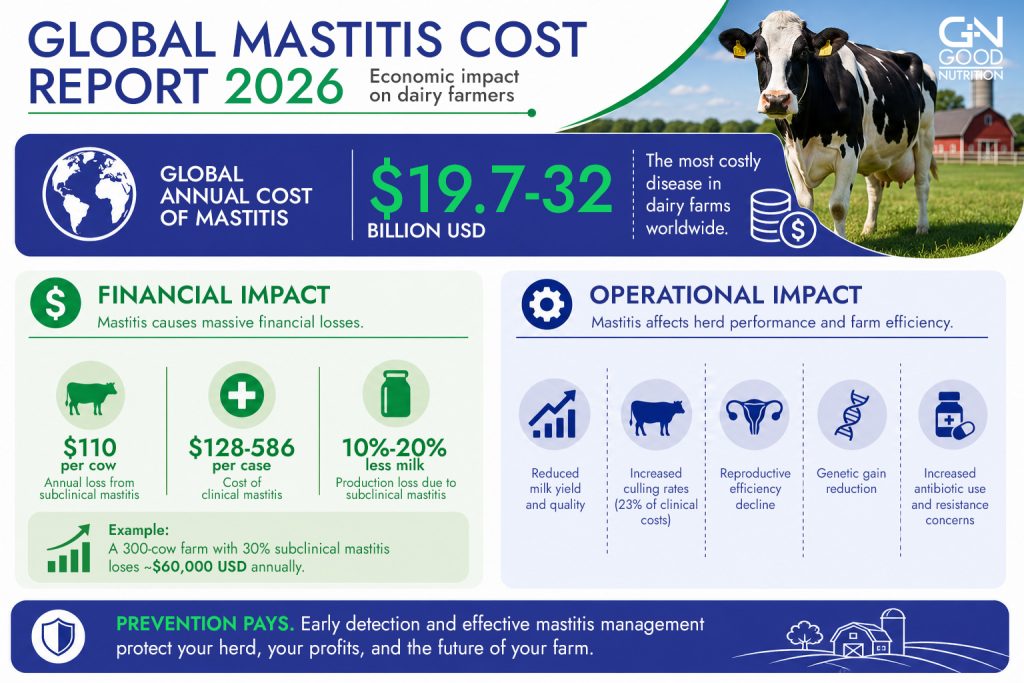
$19.7–32 billion USD[1]
Clinical Mastitis Global Loss
$13 billion USD annually [2][3]
Subclinical Mastitis Global Loss
$9 billion USD annually [2][3]
Clinical Mastitis Cost Per Case
$128–$586 USD[37]
Subclinical Mastitis Cost Per Cow
~$110 USD annually [1][4]
📈 Cost Breakdown for Clinical Mastitis (Per Case)
Cost Component
Percentage
Milk Production Losses
31% [1][10]
Veterinary Fees & Drugs
24% [1][10]
Discarded Milk
18% [1][10]
Premature Culling
23% [1]
Excess Labor
4% [1][10]
Subclinical Mastitis Cost Drivers:
Production loss: 52%[11]
Blanket dry cow therapy: 48%[11]
Milk production loss: 10–20% less milk per lactation[1]
🎯 What This Means for Farmers
Financial Impact
Most Costly Disease: Mastitis costs dairy farms more than any other disease[12]
Herd-Level Loss: A 300-cow farm with 30% subclinical mastitis = ~$60,000 USD annual loss[13]
Treatment Day Cost: Each additional treatment day = $65 USD per case[14][13]
Mastitis is the #1 economic burden on dairy farms globally, costing:
$110/cow/year for subclinical (undetected)
$128–$586/case for clinical (visible)
Up to $60,000/year for a 300-cow farm with 30% subclinical rate
Best ROI investments:
Post-milking teat disinfection (positive net benefit)
Early intervention ($50 vs. $300 per case)
Treatment duration optimization ($130 saved/case)
Selective antibiotic use (2/3 reduction)
By implementing these protocols, farmers can reduce mastitis costs by 60–70% while improving milk quality, animal welfare, and profitability.
*Data sources: University of Glasgow, University of Montreal, University of Wisconsin Pam Ruegg study, Journal of Dairy Science global analysis (2024), Penn State Extension, Boehringer Ingelheim, MS Schippers *[3][2][12][1][17][8] ⁂
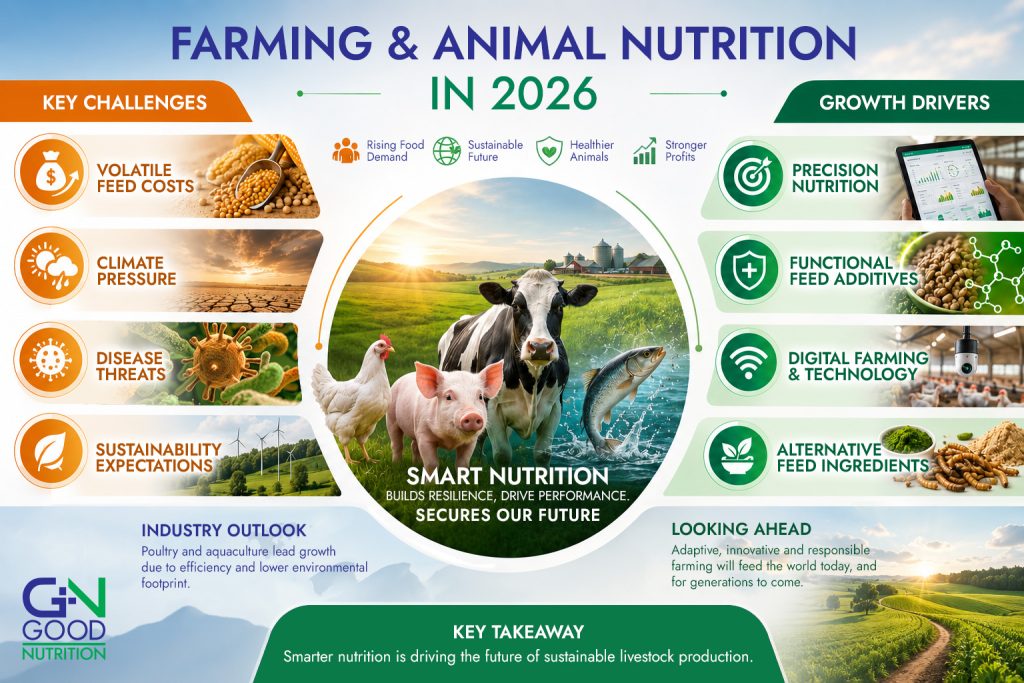
In 2026, global farming and animal nutrition operate within a complex environment shaped by rising food demand, climate pressure, economic volatility, and rapid technological change. Agriculture remains a cornerstone of global food security, yet producers are required to achieve more with fewer resources while meeting stricter sustainability and animal welfare expectations. Animal nutrition has become a strategic lever for productivity, resilience, and environmental responsibility.
Production trends show continued growth in poultry and aquaculture, largely due to their efficient feed conversion and lower environmental footprint compared to other animal proteins. According to FAO and OECD outlook reports, demand for animal protein continues to rise globally, driven by population growth and urbanisation, particularly in Asia and Africa. In many regions, beef and pork production face tighter margins and stronger regulatory scrutiny, even though they remain central to regional rural economies (FAO, OECD Agricultural Outlook 2025 to 2034).
Economic pressure is one of the defining challenges for farming in 2026. Feed ingredient prices remain volatile due to climate related crop disruptions, competition from biofuel markets, and geopolitical instability affecting global trade routes. Key raw materials such as corn, soy, and fishmeal continue to fluctuate in both price and availability. According to industry analysis by Alltech and Feedinfo, feed costs remain the single largest expense for livestock producers, making feed efficiency and precision nutrition critical to farm profitability (Alltech Global Feed Survey, Feedinfo Market Reports).
Climate change is increasingly influencing farming systems worldwide. Extreme weather events such as droughts, floods, and heat stress directly affect crop yields, feed quality, and animal performance. The World Bank and FAO both highlight that climate variability is now recognised as a major risk to agricultural stability. Across many markets, farmers are increasingly turning to nutritional strategies that support gut health, immunity, and heat stress resilience, recognising nutrition as a frontline defense against environmental stress.
Environmental impact and sustainability expectations are reshaping livestock production. Governments, retailers, and consumers are demanding reduced emissions, improved nutrient efficiency, and greater transparency across the value chain. Livestock farming is under scrutiny for its contribution to greenhouse gas emissions and nutrient runoff, particularly nitrogen and phosphorus. This has driven innovation in feed additives that improve digestibility, reduce emissions, and support more sustainable production systems (International Feed Industry Federation, IFIF Sustainability Reports).
Animal health and biosecurity remain major concerns in 2026. Recurring outbreaks of avian influenza, African swine fever, and other diseases continue to disrupt production and trade. These challenges reinforce the importance of preventative approaches, where nutrition plays a central role in strengthening immune function and reducing reliance on antibiotics. Functional feed additives, probiotics, organic acids, and phytogenics are increasingly integrated into feeding programs to support long term health and resilience.
Despite these pressures, the animal nutrition sector continues to grow, supported by innovation and technology. Precision farming tools and data driven feed formulation are becoming more accessible in many regions, particularly among larger and more integrated producers. According to McKinsey and StartUs Insights, precision nutrition improves feed efficiency, reduces waste, and allows producers to adapt quickly to changing conditions. These technologies help align economic performance with sustainability goals.
Sustainable feed innovation is another strong growth driver. Alternative proteins such as insect meal, microalgae, single cell proteins, and fermentation based ingredients are gaining traction, especially in aquaculture and specialised diets, and are highlighted as a potential pillar of future feed security. These ingredients help diversify supply chains, reduce dependence on traditional crops, and lower environmental impact. Industry reports from Rabobank and the International Feed Industry Federation highlight alternative feed ingredients as a key pillar of future feed security.
Looking ahead, farming and animal nutrition in 2026 are defined by adaptation, responsibility, and opportunity. Producers who invest in advanced nutrition, sustainable practices, and resilient systems are better positioned to manage uncertainty and build long term value. As the industry balances tradition with innovation, animal nutrition remains central to building food systems that are efficient, ethical, and capable of sustaining future generations.
Feed costs continue to be one of the largest expenses in livestock production. As nutritionists and producers look for ways to improve efficiency without compromising animal performance, lysolecithin has emerged as a valuable tool in modern feed formulation.
Many people think of lysolecithin as simply another feed additive. In reality, its greatest value comes from what it allows nutritionists to remove or reduce from a diet.
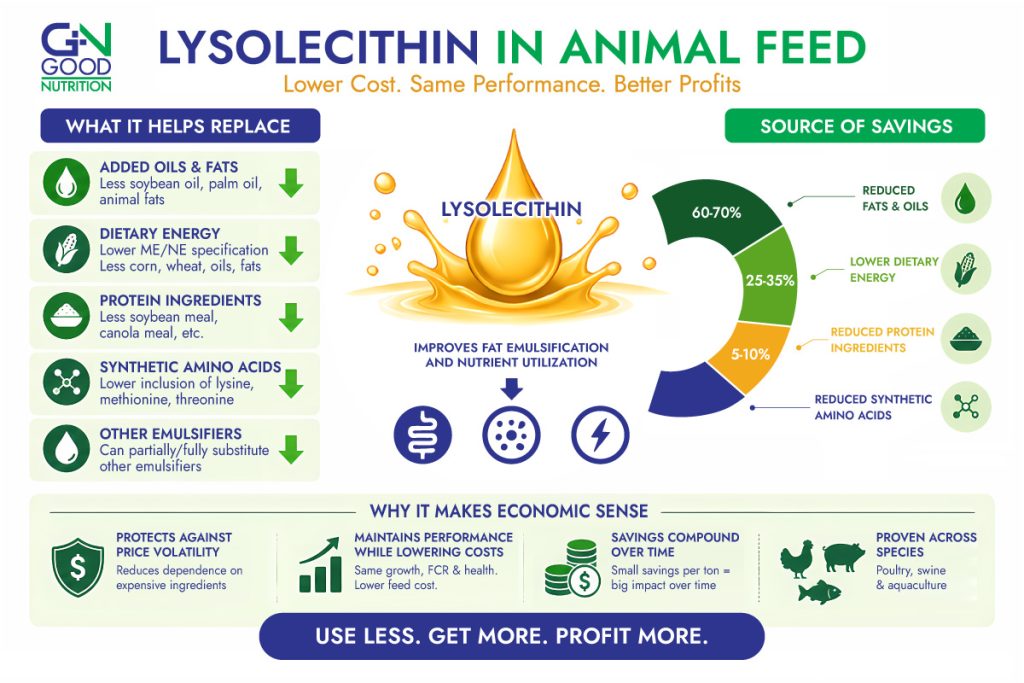
By improving fat emulsification, nutrient digestion, and energy utilization, lysolecithin enables feed formulators to lower the inclusion of more expensive ingredients while maintaining growth performance, feed conversion, and animal health. This creates cost savings that can accumulate significantly over time.
What Does Lysolecithin Replace in Animal Feed?
1. Added Oils and Fats: The Biggest Opportunity
The most common and economically important application of lysolecithin is reducing the need for added fats and oils.
Fats are a valuable source of energy, but animals must first digest and absorb them efficiently. Lysolecithin acts as a powerful emulsifier, breaking fats into smaller droplets and increasing the surface area available for lipase enzymes. This improves fat hydrolysis and fatty acid absorption in the gastrointestinal tract.
As a result, nutritionists and formulators may:
Reduce added vegetable oils such as soybean oil and palm oil
Lower inclusion rates of animal fats such as tallow and lard
Utilize lower-cost fat sources
Include less digestible fats without negatively affecting performance
For example, a broiler diet containing 3% soybean oil can often be reformulated with less oil while still delivering the same usable energy for growth.
2. Dietary Energy: Unlocking the “Energy Matrix”
One of the most powerful benefits of lysolecithin is its ability to function as an energy matrix ingredient.
In practical terms, this means nutritionists formulate diets with lower baseline energy levels and rely on lysolecithin to recover part of that energy through improved nutrient utilization.
Typical matrix values range from:
50 to 100 kcal/kg of feed
Potentially higher depending on the formulation and supporting research
This allows feed formulators to reduce expensive energy-contributing ingredients such as:
Ingredient
Cost Impact
Corn
High
Wheat
Moderate to High
Vegetable Oils
Very High
Animal Fats
High
By lowering metabolizable energy (ME) and net energy (NE) specifications while maintaining performance, feed mills can significantly reduce formulation costs.
3. Protein Ingredients: Smaller but Meaningful Savings
Recent research suggests that lysolecithin may also improve protein utilization.
Studies have shown benefits such as:
Improved amino acid digestibility
Enhanced protein absorption
Better gut health that supports nutrient uptake
Because of this, nutritionists can sometimes apply a small amino acid matrix and slightly reduce high-cost protein ingredients such as:
Soybean meal
Canola meal
Other protein concentrates
Although protein-related savings are typically smaller than energy savings, they still contribute meaningful reductions to overall feed costs.
4. Synthetic Amino Acids
In precision nutrition programs, lysolecithin may also support reductions in synthetic amino acids.
Depending on available digestibility data and supplier recommendations, nutritionists may assign digestible amino acid matrix values for:
Lysine
Methionine
Threonine
This allows for slight reductions in synthetic amino acid inclusion rates while maintaining nutritional requirements. The savings may be modest, but they become significant when multiplied across large production volumes.
5. Other Emulsifiers and Digestibility Enhancers
Feeds sometimes contain lecithin, synthetic emulsifiers, or other surfactants to improve fat digestion.
Lysolecithin can partially or fully substitute these ingredients because of its superior emulsification capabilities. Its’ lysophospholipid structure not only improves fat digestion but also enhances membrane fluidity in intestinal epithelial cells, helping animals absorb nutrients more efficiently.
Where Do the Biggest Savings Come From?
Research across poultry, swine, and aquaculture consistently shows that most economic benefits come from two areas:
Source of Savings
Relative Contribution
Reduced fats and oils
60-70%
Lower dietary energy specification
25-35%
Reduced protein ingredients
5-10%
Reduced synthetic amino acids
Small but consistent
This is not surprising because fats and oils are often among the most expensive ingredients in feed formulations. Even small reductions can generate substantial financial returns. The relative proportions depend on species, diet structure and local ingredient prices.
Why Is Lysolecithin Economically Sustainable Long-Term?
Protection Against Volatile Ingredient Prices
Feed ingredient markets are notoriously unpredictable.
When soybean oil prices rise, palm oil becomes expensive, corn prices increase, or global commodity markets tighten, feed costs can quickly erode profitability.
Because lysolecithin reduces dependence on expensive fats and improves utilization of lower-cost alternatives, it acts as a buffer against market volatility. This becomes increasingly valuable during periods of inflation and supply uncertainty.
Maintaining Performance While Lowering Costs
The most compelling benefit of lysolecithin is not necessarily improved performance.
The stronger value proposition is:
Maintain the same performance while spending less on feed.
By improving nutrient utilization, lysolecithin allows producers to reduce feed costs without sacrificing:
Growth rate
Feed conversion ratio (FCR)
Animal health
Overall production efficiency
When performance remains stable, the savings become direct improvements in profit margin rather than trade-offs between cost and productivity.
Savings That Compound Over Time
The financial impact becomes even more significant when viewed over multiple production cycles.
Consider a commercial poultry operation producing 10,000 tons of feed annually.
Depending on local ingredient prices and applied matrices, commercial case study often report savings in the range of US$25 to US$50 per ton of feed with lysolecithin inclusion:
Annual savings = US$250,000 to US$500,000
Five-year savings = US$1.25 million to US$2.5 million
These savings compound because every production cycle benefits from the same reduction in formulation costs while maintaining performance.
Natural Origin and Regulatory Stability
Another advantage is its source.
Lysolecithins are derived from hydrolyzed soy lecithin, making them naturally sourced feed ingredients.
This provides several long-term advantages:
Regulatory stability
Consumer acceptance
Reduced concerns over synthetic additives
Greater compliance confidence across different markets
As regulations surrounding feed additives continue to evolve globally, naturally derived ingredients are likely to become even more valuable.
Additional Value During Heat Stress
Heat stress presents a recurring challenge in livestock production.
During warmer months, nutritionists often increase dietary fat levels to maintain energy intake while reducing heat production from digestion.
Lysolecithin improves the utilization of these added fats, making energy delivery more efficient and creating a seasonal economic advantage that repeats year after year.
Why Formulation Strategies Differ by Species
The amount of energy, fat, or protein that can be removed depends on several factors:
Factor
Impact
Species
Broilers, layers, piglets, sows, shrimp, and fish all have different nutritional requirements
Fat Source
Digestibility differs between vegetable and animal fats, as well as saturated and unsaturated fats
Matrix Value
Product research determines safe reduction levels
Production Stage
Growth, maintenance, and reproduction stages require different nutritional approaches
Because of these differences, successful lysolecithin application is never a one-size-fits-all solution. Feed formulations must be optimized according to species, production goals, and available research data.
The Commercial Value Proposition
For feed manufacturers and nutrition companies, the strongest message is not simply that lysolecithin improves performance.
The more compelling story is that it helps reduce feed costs while maintaining performance.
This matters because:
Feed mills are under constant pressure to lower formulation costs.
Producers cannot afford to compromise growth or FCR.
Commodity markets remain volatile.
Proven performance maintains confidence throughout the production chain.
When all four challenges are addressed simultaneously, lysolecithin becomes more than a feed additive. It becomes a strategic business tool.
Conclusion: More Than an Additive
Lysolecithin’s long-term value comes from its ability to improve nutrient utilization while allowing nutritionists to strategically reduce expensive feed ingredients.
The result is a combination of:
Immediate feed cost savings
Long-term cumulative economic benefits
Protection against ingredient price volatility
Consistent animal performance
Regulatory confidence through natural sourcing
For an industry facing ongoing pressure from rising feed costs and fluctuating commodity prices, lysolecithin represents more than a nutritional enhancement. It is a practical and sustainable strategy for improving profitability and operational efficiency over the long term.
Research across poultry, swine, and aquaculture production systems continues to demonstrate the economic value of lysolecithin when used as part of a well-designed feed formulation strategy.
Most of the microbes living there are helpful citizens that help digest feed and support health. But sometimes harmful bacteria move in and cause trouble.
This is where *monolaurin* comes in.
Monolaurin is a natural compound derived from lauric acid, a fatty acid found in coconut oil and palm kernel oil. It has been studied for its ability to disrupt the outer membranes of certain harmful bacteria, viruses, and other microorganisms.
Think of it as a security guard that helps keep unwanted visitors under control.
By helping reduce microbial challenges, monolaurin can support:
✅ Gut health ✅ Natural immune defenses ✅ Feed efficiency ✅ Animal resilience during periods of stress
For young animals, this can be especially important because their immune systems and digestive systems are still developing.
The goal is not to “fight everything.” A healthy gut contains many beneficial microbes that animals need. Instead, monolaurin helps create a more balanced environment where animals can focus more energy on growth, production, and overall performance.
A Simple Analogy
If an animal’s body were a castle:
* The immune system is the army.
* The gut is the castle wall.
* Harmful pathogens are invaders.
* Monolaurin helps weaken the invaders before they can cause major damage.
This allows the animal’s natural defenses to do their job more effectively.
Why Nutritionists Find It Interesting
In modern animal production, there is increasing focus on supporting animal health through nutrition rather than relying solely on treatments after problems occur.
Monolaurin is one example of how a naturally derived ingredient can help support animals from the inside out, contributing to healthier guts, stronger defenses, and more resilient livestock.
After all, healthier animals are not just better performers. They are more comfortable, more productive, and better equipped to handle the challenges of modern farming.
*Fun fact:* Monolaurin may be tiny, but it works at the microscopic level where many of the biggest animal health challenges begin.
When dairy farmers think about mastitis, they often picture swollen udders, abnormal milk, veterinary treatments, and discarded milk. These visible symptoms are characteristic of clinical mastitis, the form of mastitis that immediately demands attention.
However, what many farms overlook is that the greatest financial losses often come from a much quieter threat: subclinical mastitis.
Unlike clinical mastitis, subclinical mastitis shows no obvious signs. The milk appears normal. The udder appears healthy. The cow continues to enter the milking parlor every day.
Yet beneath the surface, inflammation is reducing milk production, damaging udder tissue, and quietly eroding farm profitability.
Clinical Mastitis vs. Subclinical Mastitis
The primary difference between the two conditions is visibility.
Clinical mastitis presents visible symptoms such as clots or flakes in milk, swollen udders, reduced appetite, fever, and noticeable decreases in milk production. Because the symptoms are obvious, farmers can identify and treat affected cows quickly.
Subclinical mastitis, on the other hand, is largely invisible. There are no obvious physical signs. Detection typically requires monitoring Somatic Cell Count (SCC), California Mastitis Tests (CMT), or milk culturing.
Feature
Clinical Mastitis
Subclinical Mastitis
Visible signs
Yes
No
Abnormal milk
Yes
No
Udder swelling
Often
Rare
Elevated SCC
Yes
Yes
Easy to detect
Yes
No
Immediate treatment
Usually
Often delayed or missed
Main financial impact
Discarded milk, culling, treatment
Long-term milk production losses
The Surprising Financial Reality
Many farmers assume clinical mastitis is the most expensive form because treatment costs are visible and immediate.
The reality is quite different.
Research consistently shows that subclinical mastitis accounts for approximately 75% to 80% of all mastitis-related economic losses, while clinical mastitis contributes only 20% to 25%.
Clinical mastitis may cost more per individual case, with estimates ranging from USD 128 to USD 586 per case, depending on severity and location. However, subclinical mastitis affects far more cows and often remains undetected for extended periods.
Metric
Clinical Mastitis
Subclinical Mastitis
Cost per case
USD 128-586
Continuous loss
Share of total mastitis losses
20-25%
75-80%
Visibility
High
Low
Main driver of losses
Milk loss and premature culling
Chronic milk yield loss and lost premiums
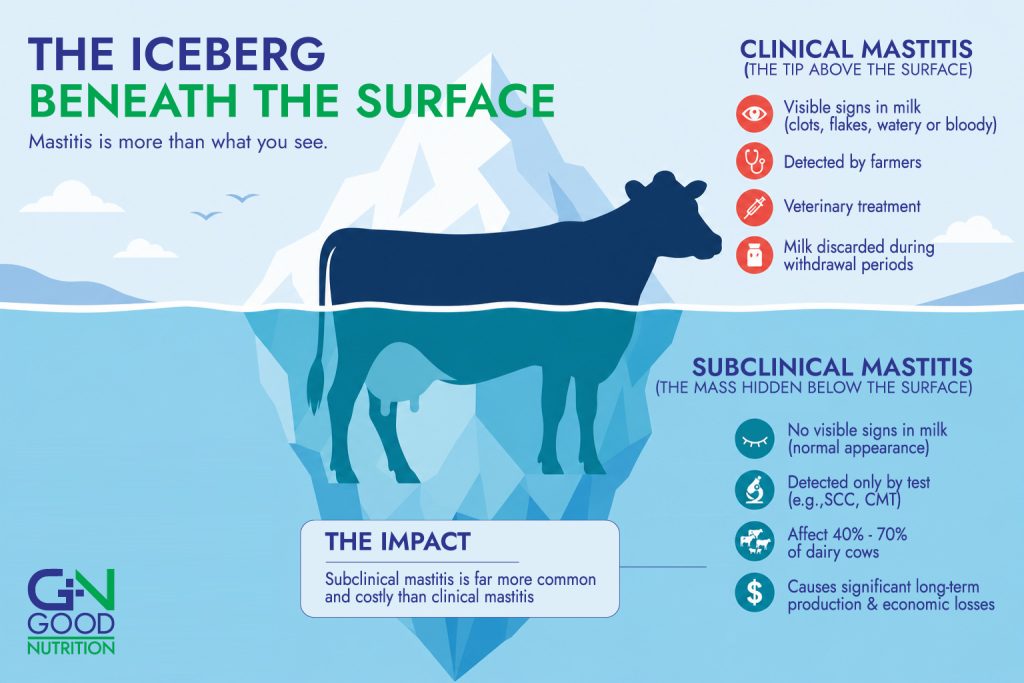
The Iceberg Beneath the Surface
Experts often describe mastitis as an iceberg.
Clinical mastitis is the visible tip above the water. Farmers see abnormal milk, call the veterinarian, administer treatments, and discard milk during withdrawal periods.
Subclinical mastitis is the much larger portion hidden below the surface.
Studies indicate that roughly 40% and 70% of dairy cows may be affected by subclinical mastitis, compared with approximately 20 to 30 clinical cases per 100 cows annually.
Because these infections often go unnoticed, farms experience ongoing losses through:
Reduced milk production
Elevated somatic cell counts
Lower milk quality premiums
Increased risk of future infections
Reduced longevity of productive cows
Where the Money Is Really Lost
The distribution of mastitis costs differs significantly between clinical and subclinical cases.
For clinical mastitis, major costs include:
Culling and mortality (23 – 36%)
Milk production losses (19 – 48%)
Discarded milk during treatment (15 – 36%)
Treatment expenses (8 – 24%)
For subclinical mastitis, the picture changes dramatically.
Milk production losses account for approximately 52% of total costs, making reduced performance the largest economic burden.
In other words, the greatest cost of subclinical mastitis is not treatment. It is the milk that never reaches the bulk tank.
Long-Term Consequences for Dairy Farms
The long-term impact extends beyond lost milk.
A cow experiencing chronic udder inflammation often becomes less productive throughout her lactation. Elevated SCC levels may reduce milk quality bonuses. Repeated infections can increase culling rates, forcing farms to replace productive animals earlier than planned.
Recent Canadian estimates suggest mastitis can cost dairy operations approximately USD 670 per cow annually across the entire herd, with subclinical mastitis contributing the largest share of those losses.
Globally, mastitis is estimated to cost the dairy industry roughly USD 20-30 billion annually, making it one of the most expensive health problems in dairy cattle.
Looking Beyond Treatment
For many years, mastitis management focused primarily on treating infections after they occurred.
Today, leading dairy farms recognize that long-term profitability depends on prevention.
This includes:
Monitoring SCC trends
Improving udder hygiene
Supporting immune function through nutrition
Managing inflammation effectively
Strengthening resilience during transition periods
The goal is no longer simply treating mastitis. The goal is reducing the hidden losses that occur long before clinical signs appear.
Because in many herds, the most expensive mastitis cases are not the ones farmers can see. They are the ones quietly reducing milk production every single day.