
Lecithin might sound like a modern food additive, but its story begins long before industrial nutrition. The word lecithin comes from the Greek word “lekithos”, meaning egg yolk, where it was first discovered. Even today, egg yolk remains one of the richest natural sources of lecithin.
At its core, lecithin is a group of naturally occurring fats called phospholipids. These compounds are found in both plant and animal tissues and have a unique superpower. They attract both water and fat. This makes lecithin amphiphilic, meaning it is both water loving and fat loving. That single property explains why lecithin plays such a critical role in nutrition, digestion, and cellular health.
Where Lecithin Comes From
While eggs are the best whole food source, most commercial lecithin comes from oil rich plants. Soybeans are the most common source worldwide, followed by sunflower seeds and rapeseed. In recent years, sunflower lecithin has gained popularity, especially in Europe, because sunflower is not classified as a food allergen and is not associated with genetically modified crops.
This shift is not just regulatory. It also reflects growing demand for cleaner labels and more transparent ingredient sourcing.
What Lecithin Is Made Of
Commercial lecithin, also known as E322, is a complex mixture of more than 45 naturally occurring lipids. About half of these are phospholipids, which are the most biologically active components.

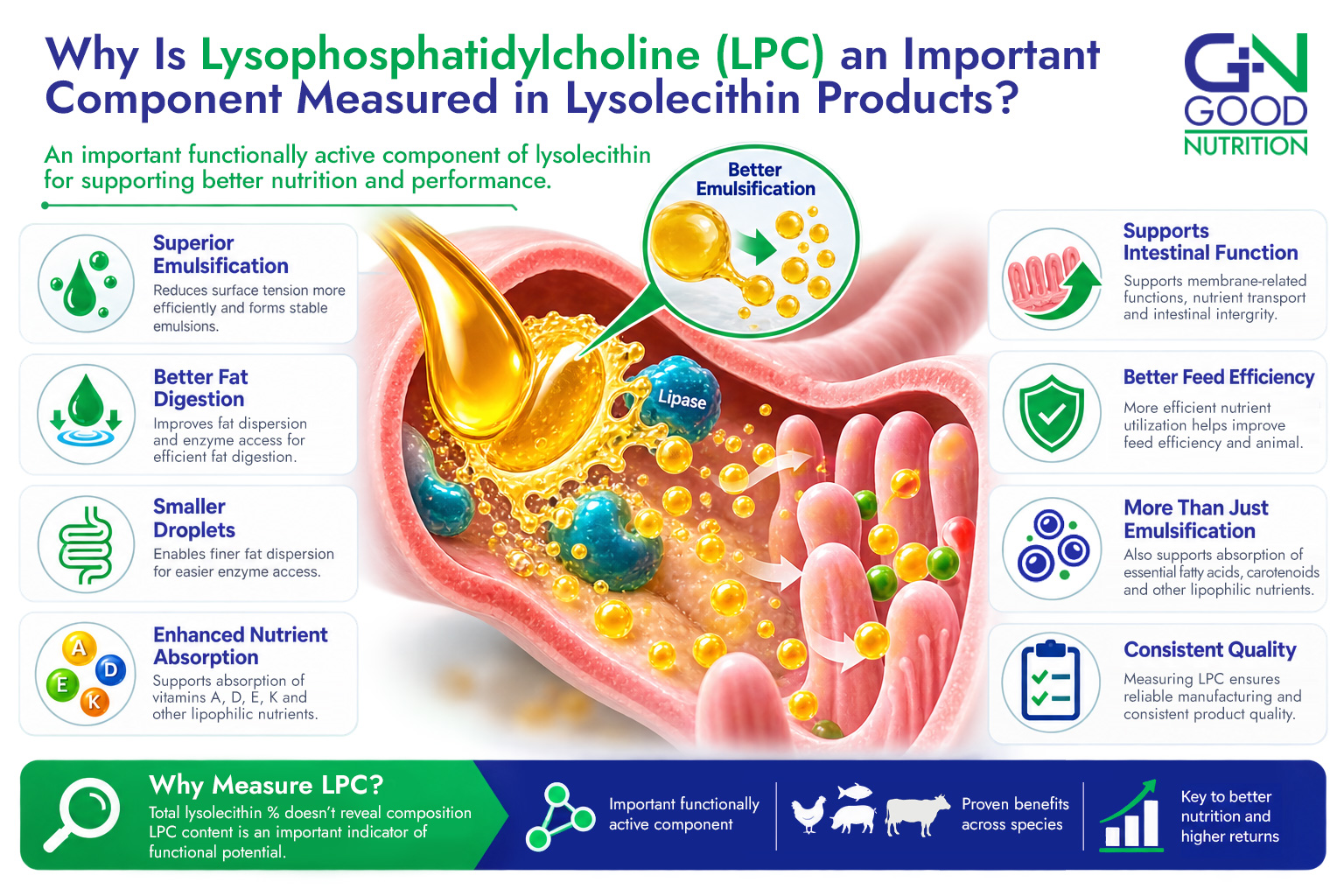
All phospholipids share the property of being soluble in lipid solvents except for acetone (this property allows them to be readily distinguished from fatty acids). Acetone insoluble (AI), expressed as a percentage, is a measure of the surface-active (functional) portion of lecithin, comprised mainly of phospholipids and glycolipids. This fraction is also known as lysolecithin or lysophosphatidylcholine (LPC). The amount of AIs is used as a quality parameter for lecithin, with higher AIs indicating a more polar and emulsifying lecithin.
Phosphatidylserine (PS) plays a crucial role in the structure and function of cell membranes, particularly in the brain. It plays a crucial role in the process of apoptosis, or programmed cell death.
Phosphatidic acid (PA) is an important lipid messenger and metabolic intermediate that influences diverse cellular processes through its signaling functions, effects on membrane curvature, and is the precursor for the biosynthesis of many other lipids.
The Key Phospholipids Inside Lecithin
Not all phospholipids are the same. Each plays a specific role in the body.
Phosphatidylcholine, often simply called lecithin, is the most abundant phospholipid in cell membranes. It is essential for fat digestion, bile formation, and nerve insulation. It is also the primary emulsifier that stabilizes oil in water mixtures.
Phosphatidylethanolamine supports membrane flexibility and is highly concentrated in mitochondria, where energy production takes place. It is particularly effective in water in oil emulsions.
Phosphatidylserine is critical for brain function and cell signaling and plays a key role in programmed cell death, a natural process that keeps tissues healthy.
Phosphatidic acid acts as a powerful signaling molecule inside cells and is a building block for many other lipids.
Phosphatidylinositol exists in multiple forms and is involved in insulin signaling, metabolism, stress response, and even taste perception.
Why Source Matters
The nutritional profile of lecithin depends heavily on where it comes from. Soy lecithin tends to be rich in phosphatidylcholine and contains a higher proportion of omega 6 fatty acids. Sunflower lecithin has more phosphatidylinositol and less phosphatidylethanolamine. Rapeseed lecithin typically contains higher levels of monounsaturated fatty acids, especially oleic acid, similar to rapeseed oil.
Climate, geography, storage conditions, and processing methods all influence the final phospholipid profile. Even the enzymes used during processing can change which lysophospholipids are produced.
Lecithin and Animal Nutrition
For years, the benefits of lysolecithin in animal feed were attributed mainly to phosphatidylcholine. However, newer research tells a more nuanced story.
A 2017 broiler study compared diets supplemented with purified phosphatidylcholine versus diets containing lysolecithin. The lysolecithin diets led to greater villus height in the intestine and stronger gene expression related to nutrient absorption. This showed that it is not just one molecule doing the work, but the combined action of multiple lysophospholipids that improves gut health and performance.
The Takeaway
Lecithin is far more than an emulsifier. It is a foundational nutritional building block that supports digestion, cellular integrity, energy production, and overall performance. Understanding its composition and source allows nutritionists and producers to make smarter choices that benefit both animal health and long term productivity.