
How does lysolecithin improve the animal feed?

lysolecithin, lecithin, livestock, poultry, swine, aqua, fish

We can’t emphasize enough how important lysolecithin is to create better animal feed.

Since feed formulations adds between 3 – 8% oils and on top of that, fats and grains also contains oils and fats, it is an enormous amount of fats to digest using only internal emulsifiers. Without help of external emulsifiers, a big amount of fats will not be digested nor absorbed. It is important include an emulsifier that will maximise the main function – the digestibility and absorption of lipids.

But what emulsifier to include?

In the case of emulsification power, GN Good Nutrition lysolecithin is far superior to lecithin to digest lipids (fats and oils) and superior nutrient absorption.
More articles
Using lysolecithin to optimize fat digestion and absorption in animal feed for farm animals namely pig and poultry
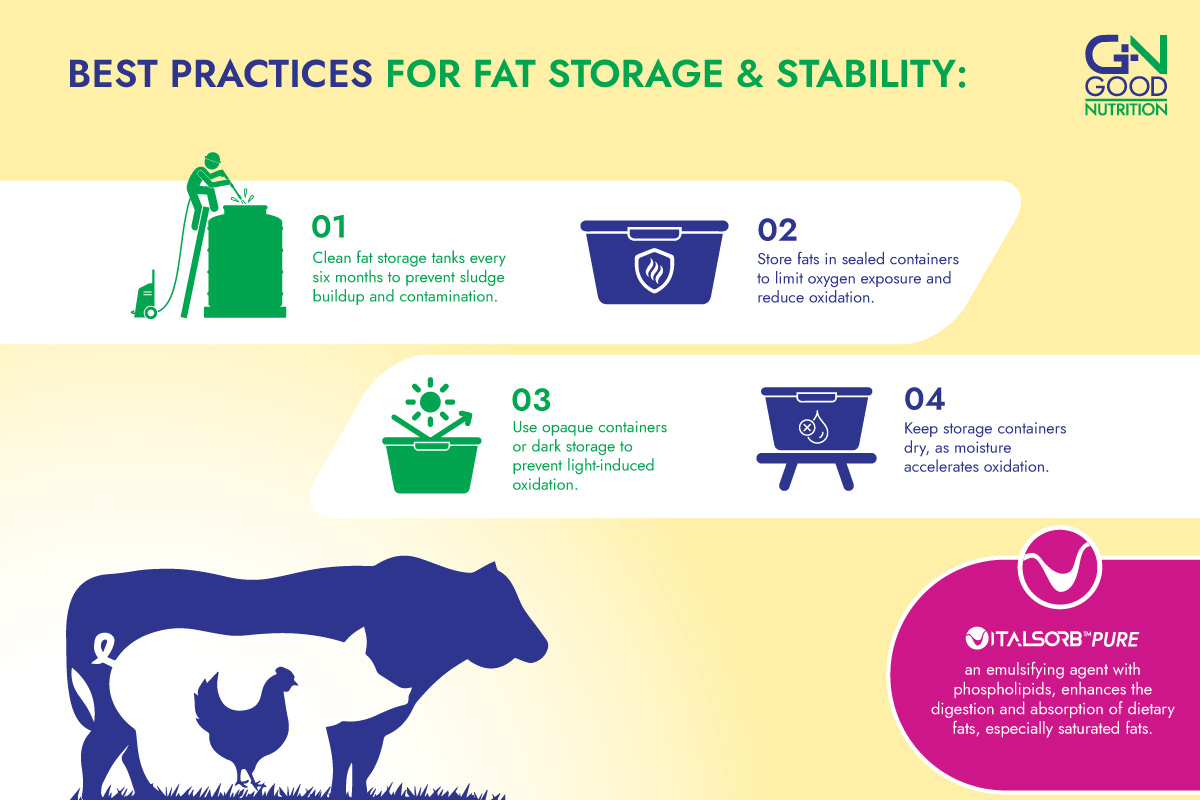
Optimizing Fat Storage and Digestion: Key Practices for Quality and Efficiency
Fats and oils play a crucial role in animal nutrition, providing a dense source of energy. However, diets with high fat content are prone to rancidity, especially when stored for extended periods or exposed to heat.
Using lysolecithin to optimize fat digestion and absorption in animal feed for farm animals namely pig and poultry
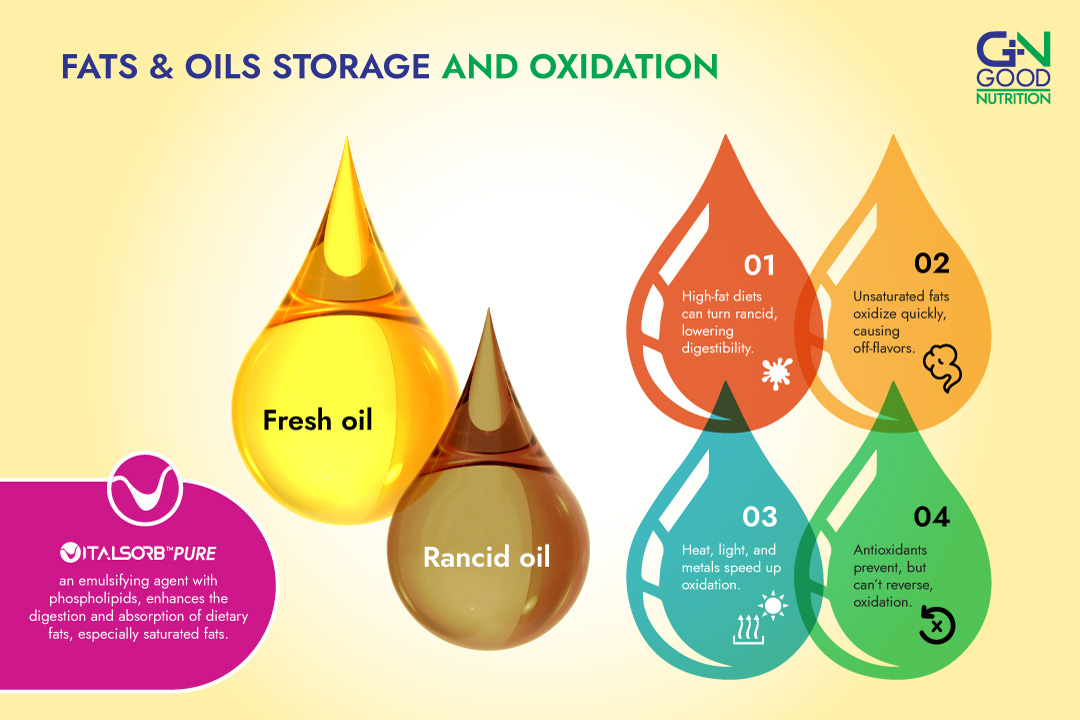
Feeding Fats & Oils: Managing Oxidation & Storage
Diets with high fat content are prone to rancidity during prolonged storage or exposure to heat, impacting digestibility and palatability. Antioxidants mitigate oxidation issues, that is crucial in warm climates.