
How does lysolecithin improve the animal feed?

lysolecithin, lecithin, livestock, poultry, swine, aqua, fish

We can’t emphasize enough how important lysolecithin is to create better animal feed.

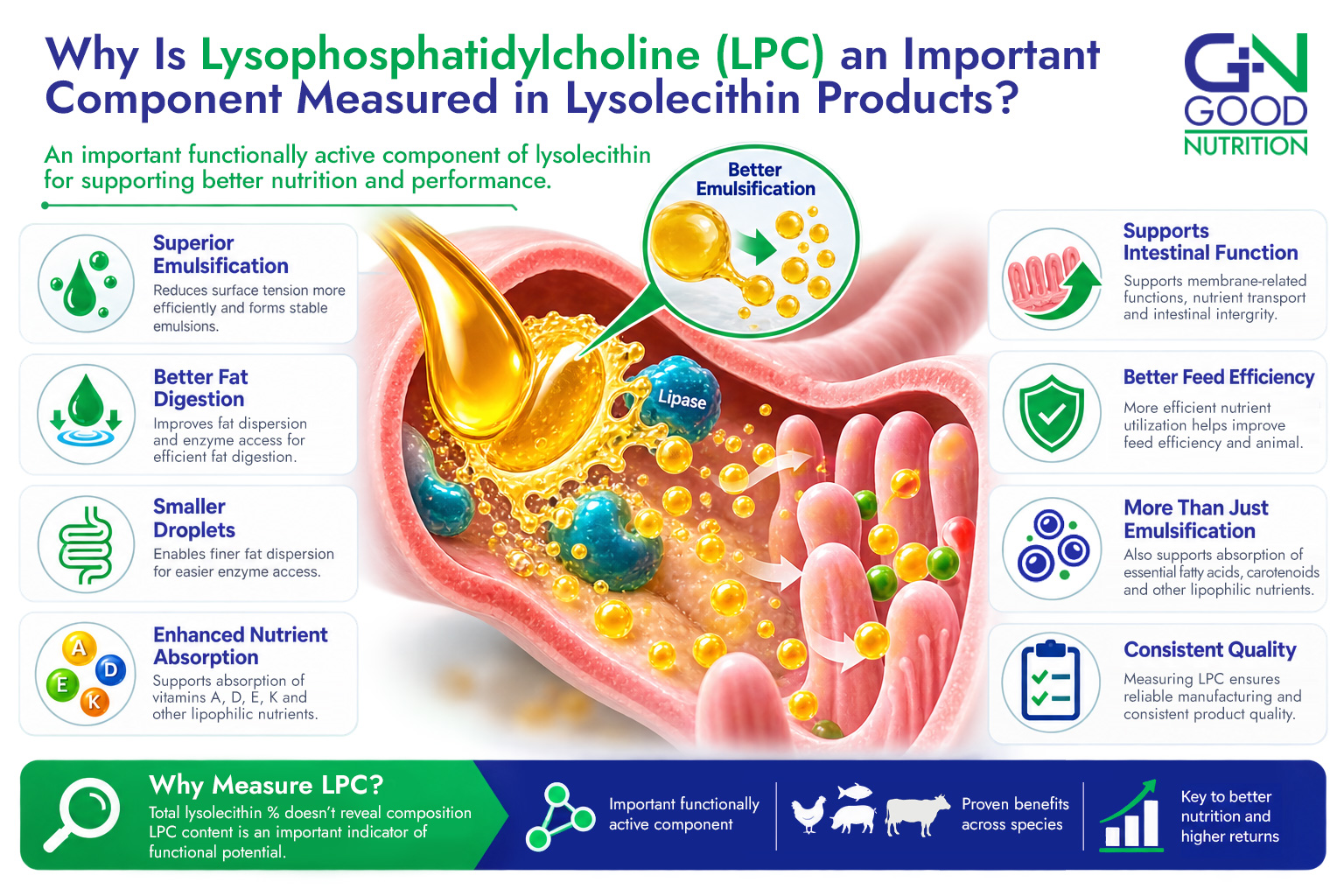
Since feed formulations adds between 3 – 8% oils and on top of that, fats and grains also contains oils and fats, it is an enormous amount of fats to digest using only internal emulsifiers. Without help of external emulsifiers, a big amount of fats will not be digested nor absorbed. It is important include an emulsifier that will maximise the main function – the digestibility and absorption of lipids.

But what emulsifier to include?

In the case of emulsification power, GN Good Nutrition lysolecithin is far superior to lecithin to digest lipids (fats and oils) and superior nutrient absorption.
More articles
Sick Cows from Mastitis
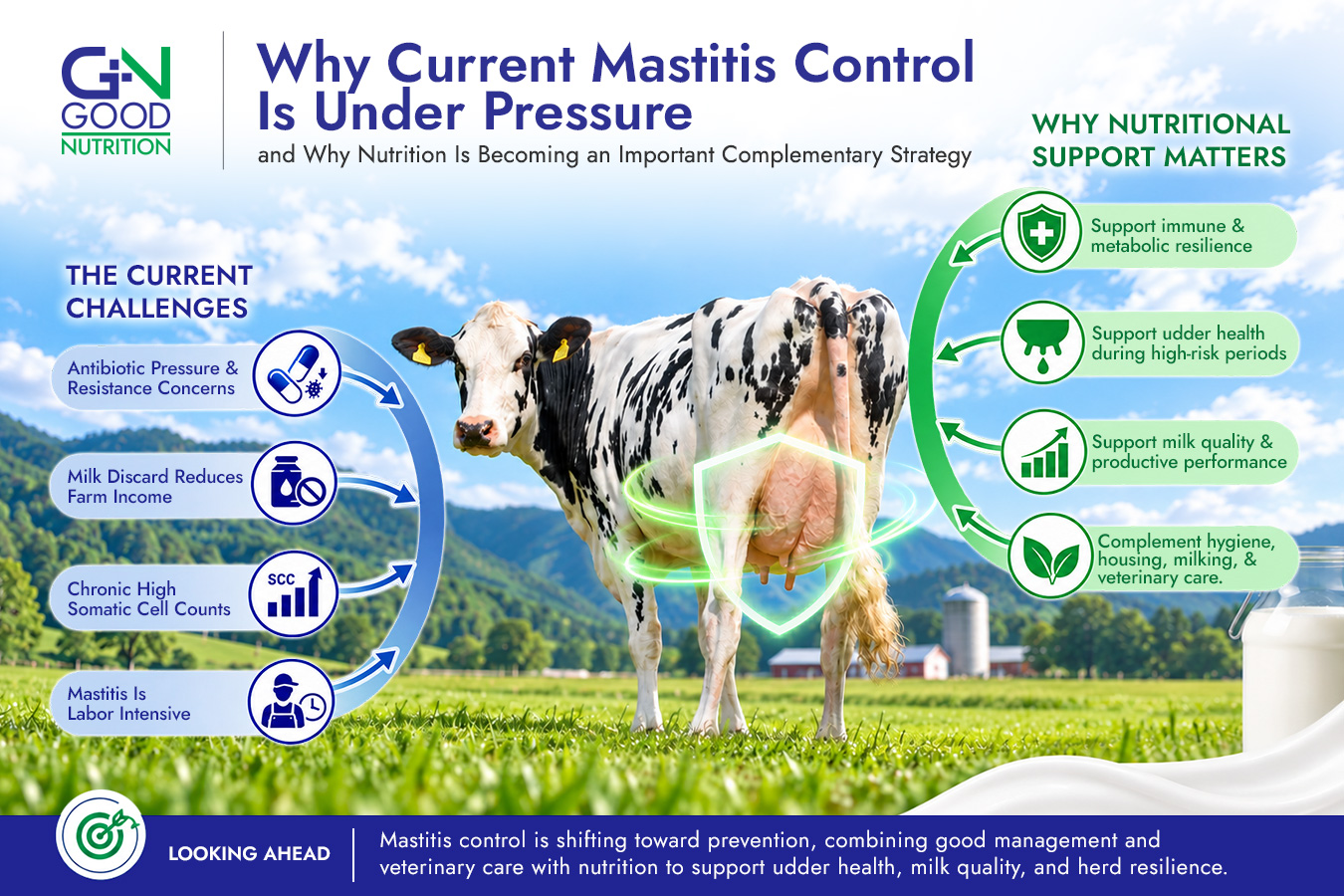
Why Some Cows Never Fully Recover from Mastitis, and What Most Farms Overlook
Most discussions around mastitis focus on pathogens, milking hygiene, and treatment strategies. These are essential, but they only address part of the issue. What often goes overlooked is what happens inside the cow during mastitis.
Fat-Digestion-for-Young-Animals
Why Young Animals Struggle with Fat Digestion, and What It Means for Performance
In the early stages of life, young animals face a hidden nutritional challenge that often goes unnoticed, their ability to digest fats is naturally limited. This is not a flaw, but a biological reality tied to how their digestive systems develop.