
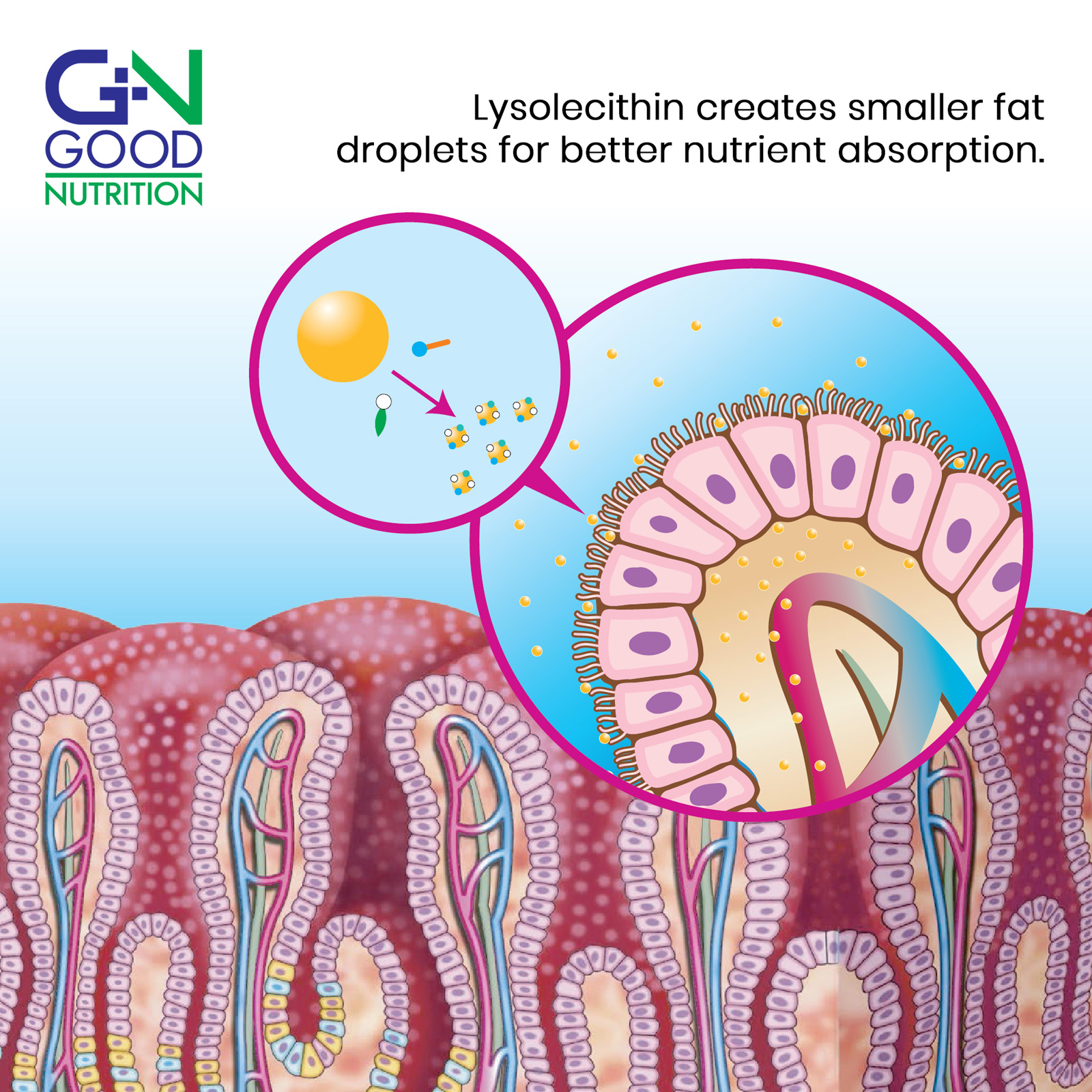
What is an emulsifier?

Lysolecithin creates smaller fat droplets for better nutrient absorption

Let’s talk about emulsifiers. So, what is an emulsifier? An emulsifier helps to mix lipids, oils and fats into the water based environment of intestines of the livestock, poultry or fish and shrimps.

How do we know one emulsifier is better than another?
The smaller the fat droplet in the water emulsion, the more easily it is absorbed.

More articles
Clinical vs Subclinical Mastitis
Clinical vs. Subclinical Mastitis: The Hidden Costs That Are Draining Dairy Farm Profitability
When dairy farmers think of mastitis, they often picture visible signs such as swollen udders, abnormal milk, treatments, and discarded milk—hallmarks of clinical mastitis. Yet the greatest financial losses often stem from the less obvious but more widespread threat of subclinical mastitis.
lysolecithin in low-fat diets
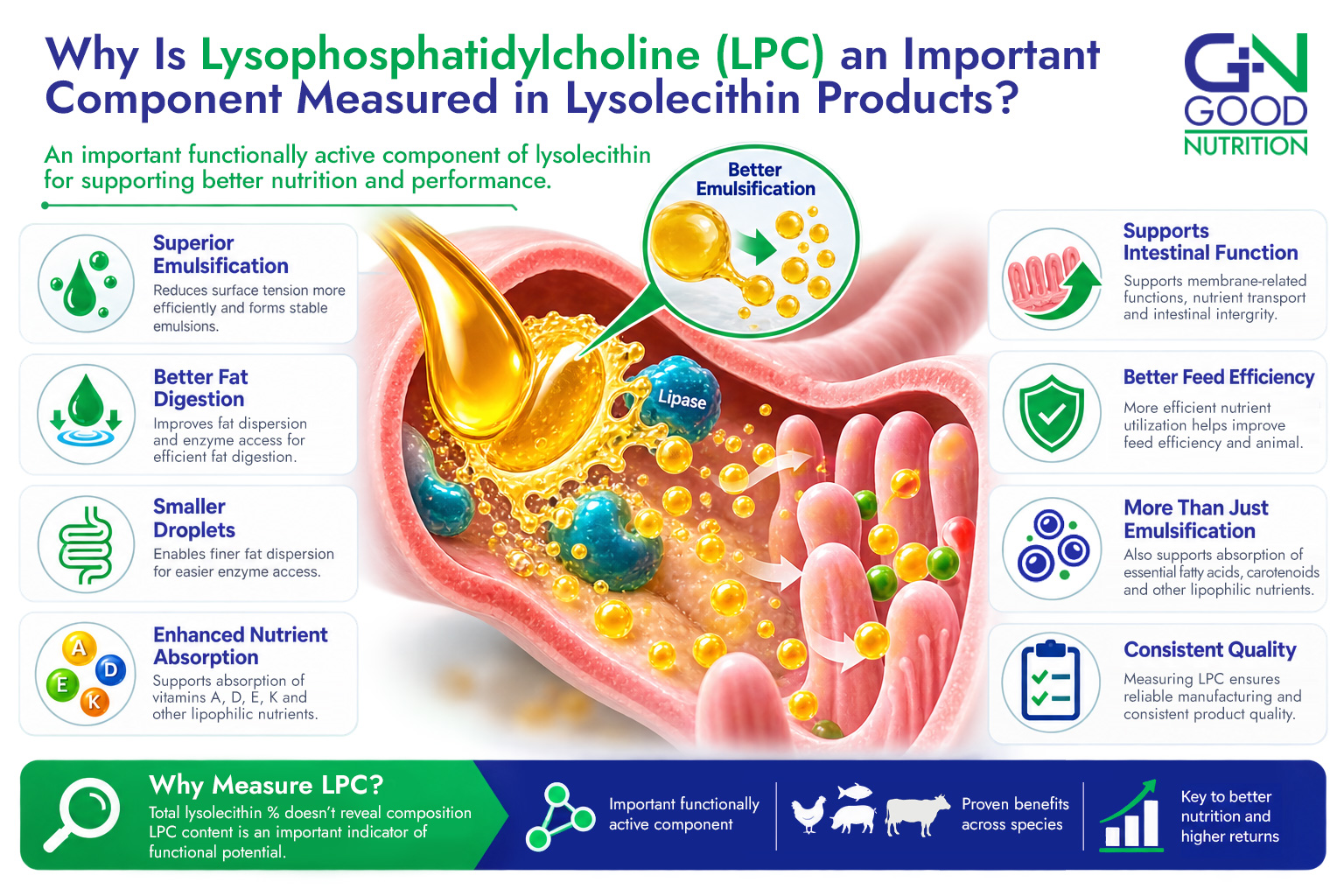
Why Lysolecithin Still Works Even in Low-Fat Animal Diets
For years, many nutritionists believed emulsifiers were only useful when large amounts of oil or fat were added into animal feed. After all, if there is very little added fat in the diet, what exactly is there to emulsify? But newer research is challenging that assumption.