



Lecithin and lysolecithin are widely used feed ingredients in animal nutrition, especially in diets where fat digestion and energy utilization are critical. While they are closely related, their functionality in the digestive system is not the same.
Understanding the difference between lecithin and lysolecithin helps farmers, nutritionists, and feed formulators choose the right emulsifier to improve fat digestibility, feed efficiency, and animal performance.
What is lecithin?
Lecithin is a naturally occurring phospholipid found in animal and plant tissues. It is commonly extracted from sources such as soybeans, sunflower seeds, or eggs. Structurally, lecithin contains a glycerol backbone with two fatty acid tails and a phosphate based head group.
Because it has both water loving and fat loving components, lecithin acts as an emulsifier. In animal feed, lecithin helps fats mix with water so digestive enzymes can access them more easily.
However, lecithin is relatively fat-loving due to its two fatty acid tails, which limits its effectiveness in the aqueous environment of the gastrointestinal tract.
What is lysolecithin?
Lysolecithin is a modified form of lecithin. The term “lyso” comes from the word lysis, meaning splitting. Through enzymatic processing, typically using phospholipase enzymes, one fatty acid tail is removed from the lecithin molecule.
This structural change creates a smaller, more hydrophilic molecule. Lysolecithin is also known as hydrolyzed lecithin or lysophosphatidylcholine and is classified as E 322.
Because lysolecithin contains only one fatty acid tail, it behaves very differently during digestion.
Figure 1: Enzymatic conversion of lecithin to lysolecithin.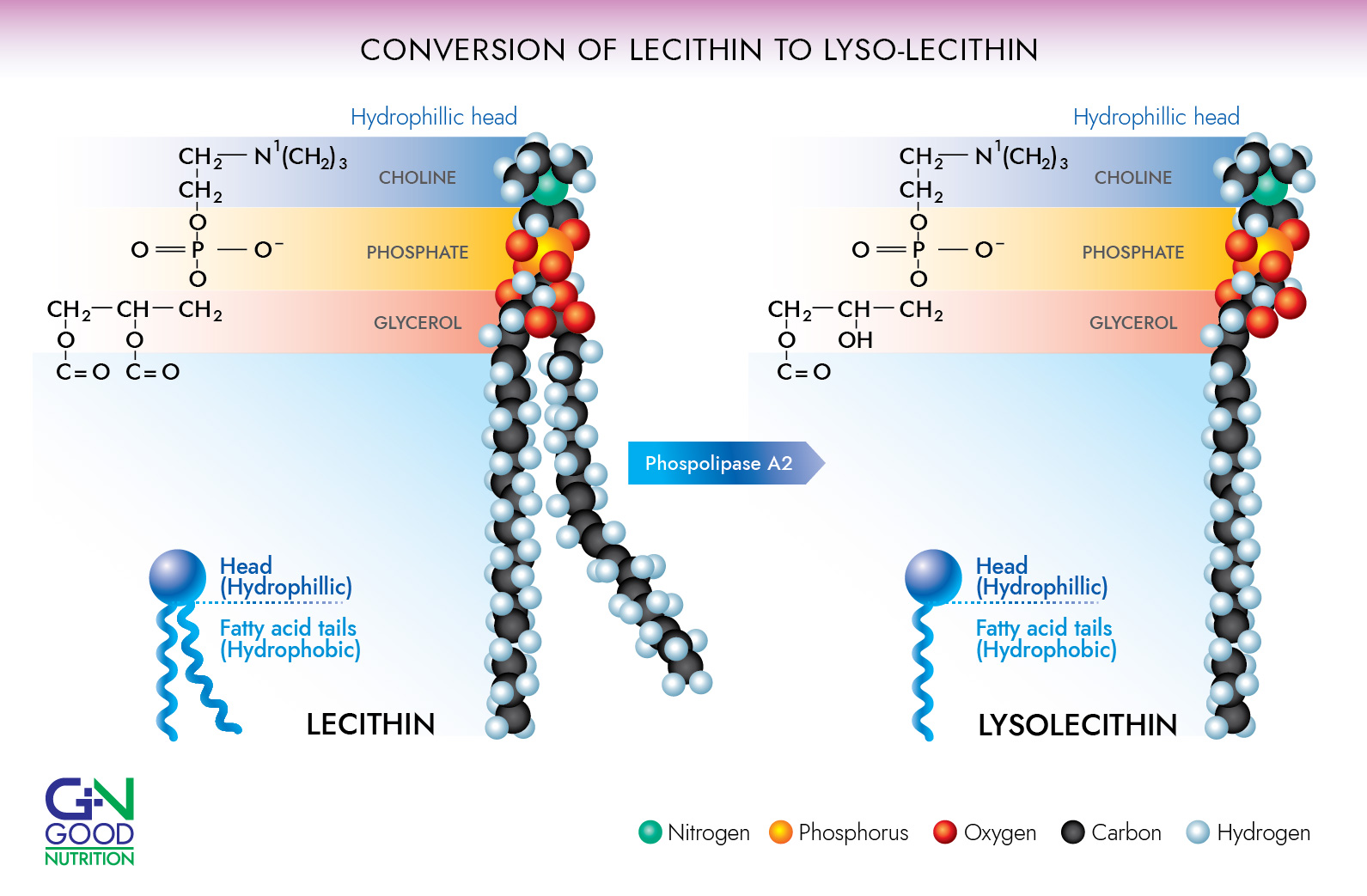
Lecithin vs lysolecithin, structural differences
The key difference between lecithin and lysolecithin lies in their fatty acid composition.
Lecithin
- Two fatty acid tails
- More lipophilic
- Larger molecular structure
Lysolecithin
- One fatty acid tail
- More hydrophilic
- Smaller molecular structure
This difference directly affects how each compound performs as an emulsifier in the digestive tract. Lecithins may also be modified by a process called fractionation. During this process, lecithin is mixed with an alcohol, usually ethanol. Some phospholipids, such as phosphatidylcholine, have good solubility in ethanol, whereas most other phospholipids do not dissolve well in ethanol. The ethanol is separated from the lecithin sludge, after which the ethanol is removed by evaporation to obtain a phosphatidylcholine-enriched lecithin fraction.
Compared to lecithin, because one molecule in the hydrophobic tail is removed in lysolecithin, the resulting lysophospholipids are smaller and result in more hydrophilic molecules than phospholipids. This improves their emulsifying capacity in oil-in-water environments (Figure 2), as found in the aqueous environment of the gastrointestinal tract, thus improving the process of digestion of dietary fats and oils (Figure 3), particularly saturated fats.
Figure 2: Vitalsorb Pure disperses faster than non-hydrolyzed lecithin.
Both products mixed for 15 seconds
Figure 3: Comparing micelle formation for non-hydrolyzed lecithin and lysolecithin.
Why lysolecithin works better in digestion
The gastrointestinal tract is a water based environment. For fats and oils to be absorbed, they must first be broken into very small droplets called micelles. These micelles transport lipids through the gut and deliver them to the intestinal wall for absorption.
Lysolecithin forms smaller and more stable micelles than lecithin. Smaller micelles move more efficiently through the unstirred water layer that lines the intestine, improving fat absorption.
Research has shown that micelles containing lysolecithin diffuse faster and improve lipid uptake compared to micelles formed with lecithin. In some studies, intestinal cholesterol uptake was many times higher when lysolecithin was present.
Lysolecithin also has a higher hydrophilic lipophilic balance and a lower critical micelle concentration than lecithin. This means it can emulsify fats more effectively at lower inclusion levels.
Effects on fat digestibility and feed energy
Multiple studies have demonstrated that lysolecithin improves fat digestibility and dietary energy utilization more effectively than lecithin. This is especially important in young animals, such as broilers, whose digestive systems are not fully developed.
In feeding trials, lysolecithin significantly improved energy values and nutrient digestibility, while lecithin showed limited or no improvement under the same conditions.
Lysolecithin is particularly effective in diets containing saturated fats, which are more difficult to digest than unsaturated fats.
Natural role of lysolecithin in the body
Lysolecithins are not foreign compounds. They are naturally produced metabolites found throughout animal tissues and play a role in normal phospholipid metabolism.
Commercial lysolecithin products contain mixtures of phospho and lysophospholipids. Their exact composition depends on the source of lecithin and the processing conditions used during production.
Because lysolecithin already exists within the body, it is readily utilized during digestion.
Practical implications in animal nutrition
From a practical feeding perspective, the difference between lecithin and lysolecithin is functional rather than theoretical.
Lecithin provides basic emulsification support, but lysolecithin offers a more targeted and efficient solution for improving fat digestion, energy utilization, and feed efficiency.
As feed costs rise and sustainability pressures increase, maximizing nutrient utilization from every kilogram of feed becomes increasingly important. Lysolecithin helps animals extract more usable energy from the same diet, supporting both economic and environmental goals.
Although lecithin and lysolecithin are closely related, their performance in animal digestion is not the same. Lysolecithin’s smaller size, greater water affinity, and superior micelle formation make it a more effective emulsifier in the gastrointestinal tract.
For feed formulations focused on improved fat digestibility and energy efficiency, lysolecithin offers a clear advantage over lecithin.
