
The type and source of dietary fatty acids have a significant impact on the carcass quality of broiler chickens. Diets that include plant oils such as rapeseed, soybean, and canola oil tend to increase the proportion of unsaturated fatty acids in the meat, including beneficial omega-3 fatty acids. These unsaturated fats enhance the nutritional value of broiler meat, making it a healthier option for consumers. However, an excessive inclusion of long-chain polyunsaturated or omega-3 fatty acids can result in off-flavors that may reduce consumer acceptance.
Animal fats, on the other hand, are known to enhance the flavor and overall palatability of meat due to their higher intramuscular fat content. While this contributes to taste and texture, it may also increase the level of saturated fats in the carcass, which are considered less desirable from a human health perspective.
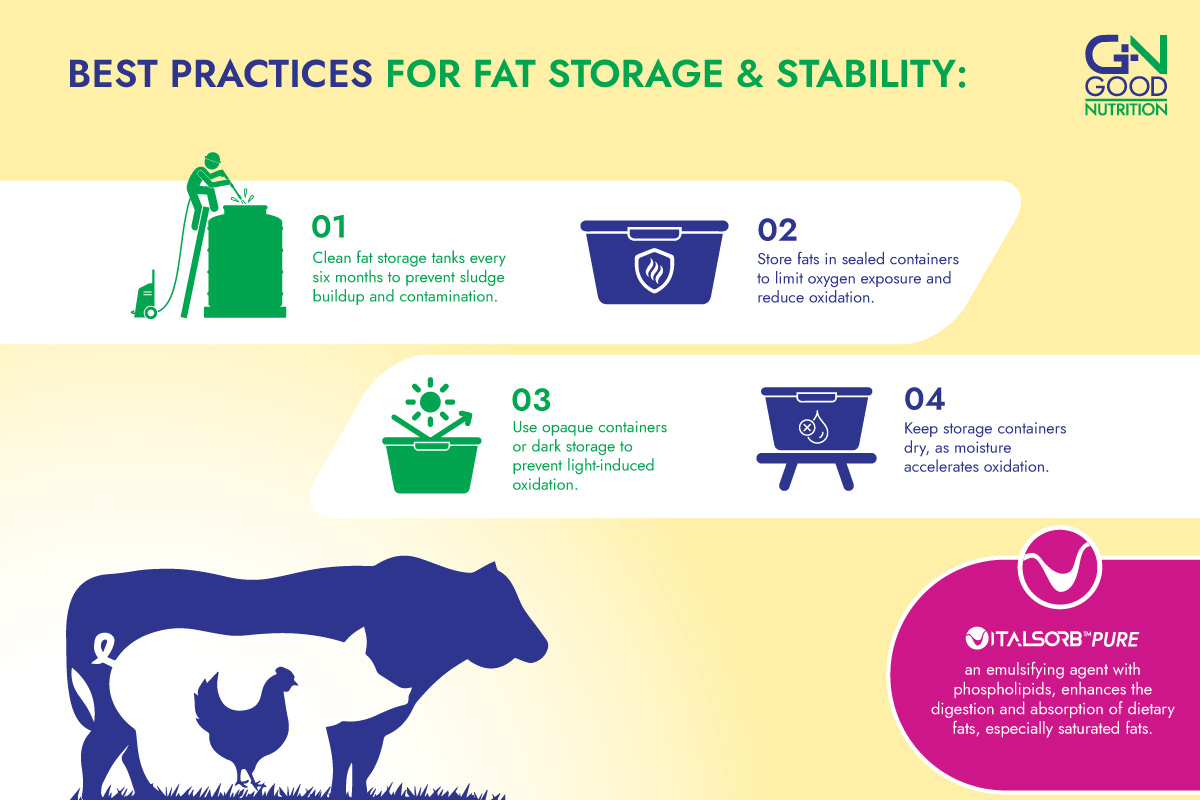
The stability of fats and oils is another critical factor. Some lipids are more susceptible to oxidation, which can cause rancidity, off-flavors, and reduced shelf life of the meat. Additionally, diets rich in saturated fatty acids may lead to higher abdominal fat deposition compared to diets that use unsaturated fatty acids from plant-based oils.
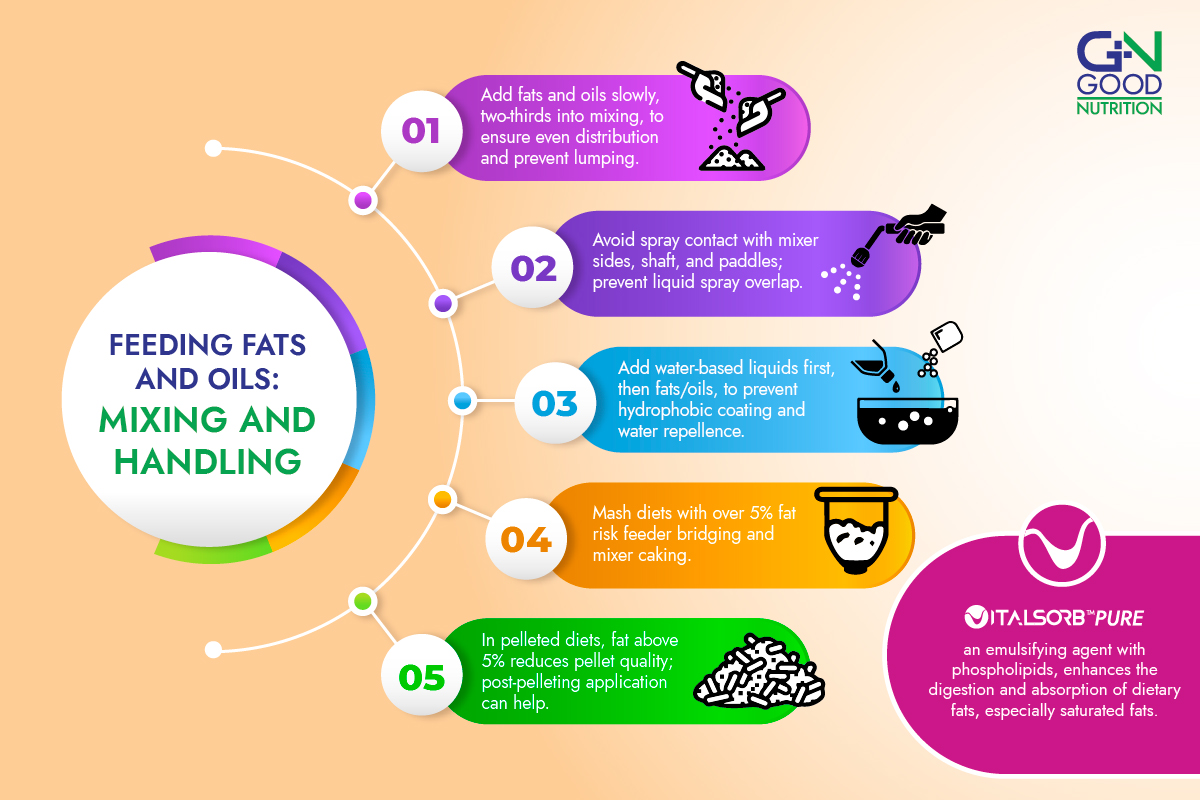
Fats are insoluble in water and therefore do not naturally dissolve in the aqueous environment of the digestive system. To improve digestion and energy utilization, fats must be well emulsified. Vitalsorb Pure, an emulsifying agent containing phospholipid components, supports the formation of stable oil-in-water emulsions. This enhances the digestion and absorption of dietary fats and oils, especially saturated fats, resulting in better feed efficiency and carcass quality.
An effective fat and oil supplementation program should balance nutritional composition, production efficiency, and cost-effectiveness. Each farm has unique nutritional needs and production goals, so it is recommended to consult with animal nutrition professionals to tailor feeding strategies for optimal results.