
Author: GN Good Nutrition Team
Reading time: 4 minutes
Why This Matters
If you manage a layer operation, you already know that every feed decision shows up in the egg basket or on your ledger. But one silent drain on profitability often slips under the radar: Fatty Liver Hemorrhagic Syndrome (FLS). Linked to excess or poorly managed dietary lipids, FLS can quietly reduce egg output, spike mortality, and dent flock welfare long before you spot a single outward sign.
Four Feed Traps That Push Hens Toward FLS
| Risk Factor | How It Harms the Liver | Practical Watch-outs |
| 1. Over-Conditioned Birds | Extra body fat crowds the liver and heightens bleeding risk at peak lay. | Monitor body weight weekly; balance dietary energy with adequate protein and micronutrients. |
| 2. Saturated vs. Unsaturated Fat | Animal-based saturated fats are stored more readily in hepatocytes and trigger pro-inflammatory cytokines (TNF-α, IL-1, IL-6). | Prioritize quality vegetable oils or blended fat sources; test iodine value to gauge saturation. |
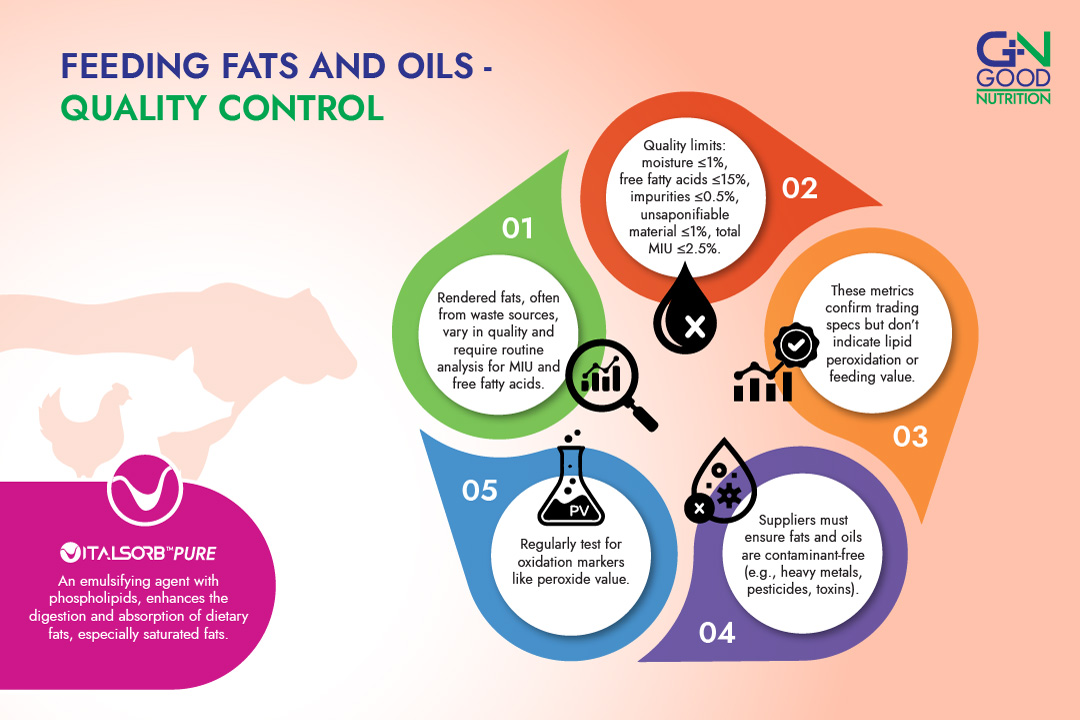
| 3. Oxidized Oils | Rancid lipids generate free radicals, enlarging the liver and impairing production. | Keep storage tanks sealed, use antioxidants, and discard oil that fails peroxide value tests. |
| 4. Missing Lipotropes | Without choline, methionine, or B-vitamins, the liver can’t “pack and ship” fat out. | Top-dress or premix proven lipotropic packages, especially during hot seasons. |
The Emulsification Equation
Fats and water famously don’t mix, yet hens must emulsify lipids before they can absorb the energy you’re paying for. The finer the fat emulsion, the higher the digestibility and the lower the risk of liver overload.
That’s where Vitalsorb™ Pure makes a measurable difference. Its natural phospholipid components create stable oil-in-water emulsions, unlocking more calories per gram particularly from hard-to-digest saturated fats while keeping hepatic fat accumulation in check.
Formulation Checklist for an FLS-Smart Diet
- Energy Density: Align kcal/kg with hen age, strain, and climate; avoid “one-formula-fits-all.”
- Fat Quality: Source verified, low-peroxide oils and rotate suppliers during storage bottlenecks.
- Balanced Amino Acids: Ensure ideal protein, especially methionine + cystine, to synergize with choline.
- Micronutrient Shield: Include selenium and vitamin E to quench oxidative stress.
- Emulsifier Support: Add Vitalsorb™ Pure at recommended rates to boost fat utilization and cut FLS risk.
Tradition Meets Innovation
At GN Good Nutrition, we’re a family-run business inspired by time-honored farming values and backed by modern feed science. Our tagline “Nutrition that Builds Legacies” drives every solution we offer, from sustainable raw-material sourcing to breakthrough additives like Vitalsorb™ Pure.
Key Takeaways
- FLS is preventable: fine-tune energy, fat type, and lipotropic support.
- Oxidation control is non-negotiable rancid oil costs far more than it saves.
- Emulsification unlocks hidden ME, reducing feed costs and liver stress.
Ready to Safeguard Your Flock?
Let our poultry nutrition specialists tailor a cost-effective, FLS-smart fat program for your farm.
➡️ Contact us today to schedule a free ration review.
Because healthy hens build healthy legacies—one egg at a time.