In animal nutrition, lysolecithin is often associated with improving fat digestion, especially in high oil diets. But a common question remains: does it still deliver value when fat inclusion is low or when no additional oil is added?
Scientific evidence suggests that the answer is yes, and the reason lies in how lysolecithin works at a deeper physiological level.
Beyond Added Fats: Working with What is Already There
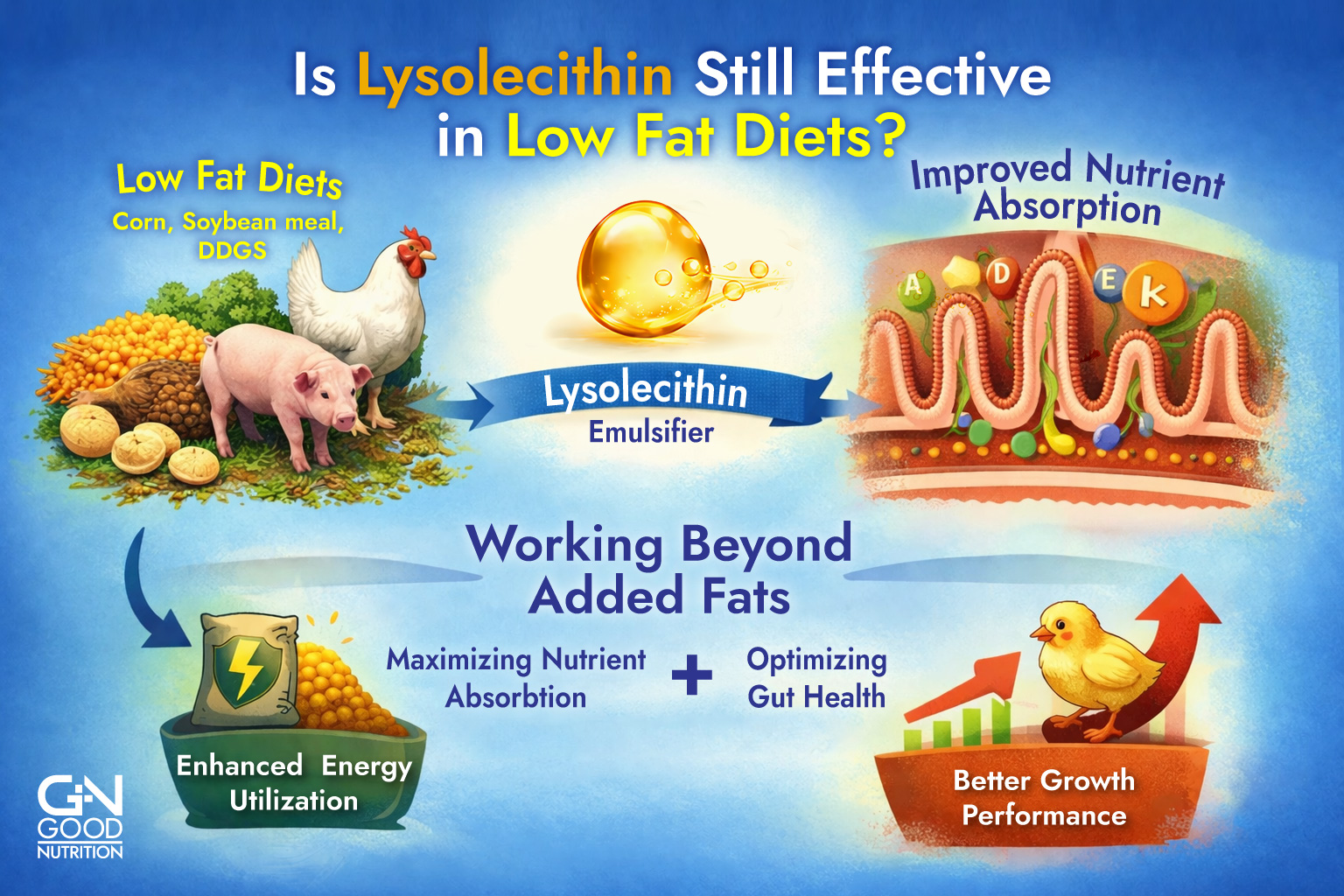
Even in diets without added oils, common feed ingredients such as corn, soybean meal, and DDGS naturally contain lipids. These intrinsic fats still require proper emulsification and digestion within the gastrointestinal tract.
Lysolecithin enhances the emulsification of these naturally occurring lipids, improving their breakdown and absorption. This means that its function is not limited to added fat, but extends to maximizing the utilization of all available lipid sources in the diet.
Enhancing Nutrient Absorption and Gut Efficiency
Lysolecithin plays a key role in the formation of micelles, which are essential for transporting lipids and fat soluble nutrients across the intestinal wall. Improved micelle formation leads to better absorption not only of fats, but also of vitamins such as A, D, E, and K.
Beyond lipid digestion, research has shown that emulsifiers like lysolecithin can improve overall nutrient digestibility. This includes energy and dry matter, indicating a broader impact on feed efficiency.
Additionally, lysolecithin has been linked to improvements in intestinal morphology, such as increased villus height. A healthier intestinal structure allows for greater surface area, which enhances nutrient absorption across the board.
Supporting Performance in Low Energy Diets
In low fat or reduced energy diets, animals often face limitations in available energy. Lysolecithin helps address this by improving the efficiency with which nutrients are utilized.
Studies have demonstrated that even in low energy formulations, emulsifier supplementation can lead to improved growth performance and feed conversion ratios. While the magnitude of improvement may be smaller compared to high fat diets, the benefits remain consistent and economically relevant.
A Functional Tool, Not Just an Add On
The role of lysolecithin should not be viewed solely as a fat emulsifier for high oil diets. Instead, it functions as a tool for improving nutrient utilization, gut efficiency, and overall performance.
Conclusion
Lysolecithin remains effective across a range of dietary conditions. It improves fat digestibility regardless of whether the fat is added or naturally present, enhances overall nutrient absorption, and supports animal performance even in low fat or low energy diets.
For nutritionists and feed formulators, this means that lysolecithin is not just a conditional additive, but a versatile component in optimizing feed efficiency and animal health.