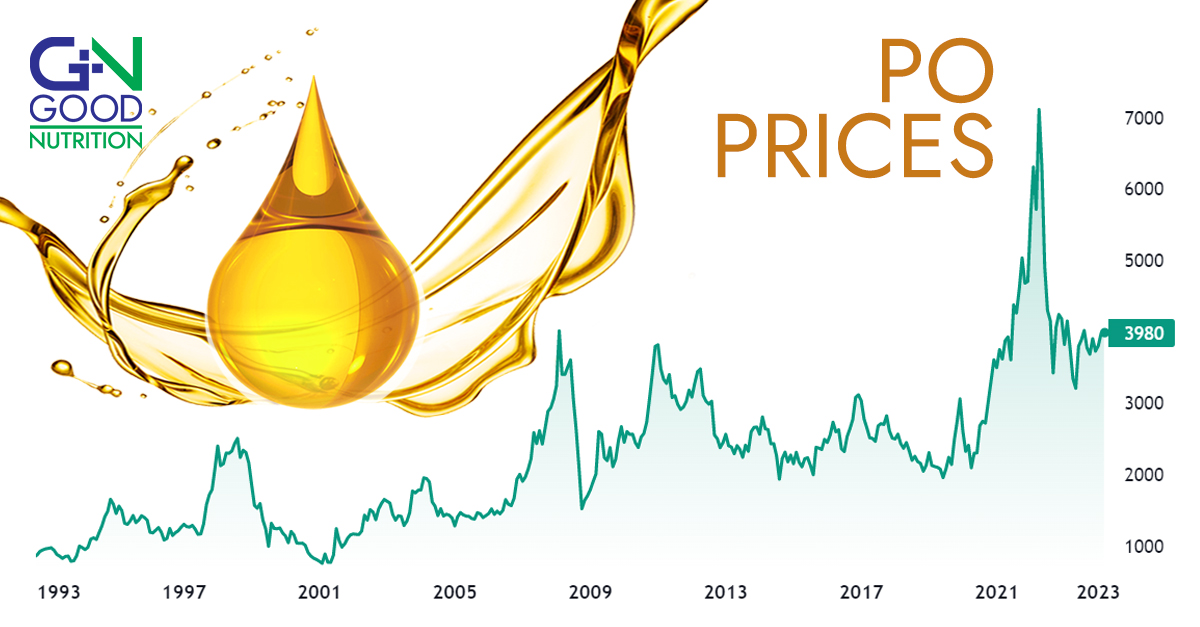
In the 1990’s, lipids (fats and oils) were cheap; about USD 300/metric ton (1990) therefore adding lipids to feed was a competitive option. However, with the global push towards sustainability, more lipids were used for manufacturing of biodiesels. As a result of using lipids for fuel, lipid prices sky rocketed and at its’ peak during Covid, it was around USD 1800/mt. It has since stabilised at USD 900/mt. However the future of lipid supply looks even tighter (less supply volume) as governments commit to higher biodiesel usage. Due to this trend, we expect lipid prices to keep increasing in the future. With this backdrop, GN Good Nutrition has manufactured lysolecithin to optimise the use of lipids in feed to help farmers reduce costs.



History of Fats and Prices
More articles
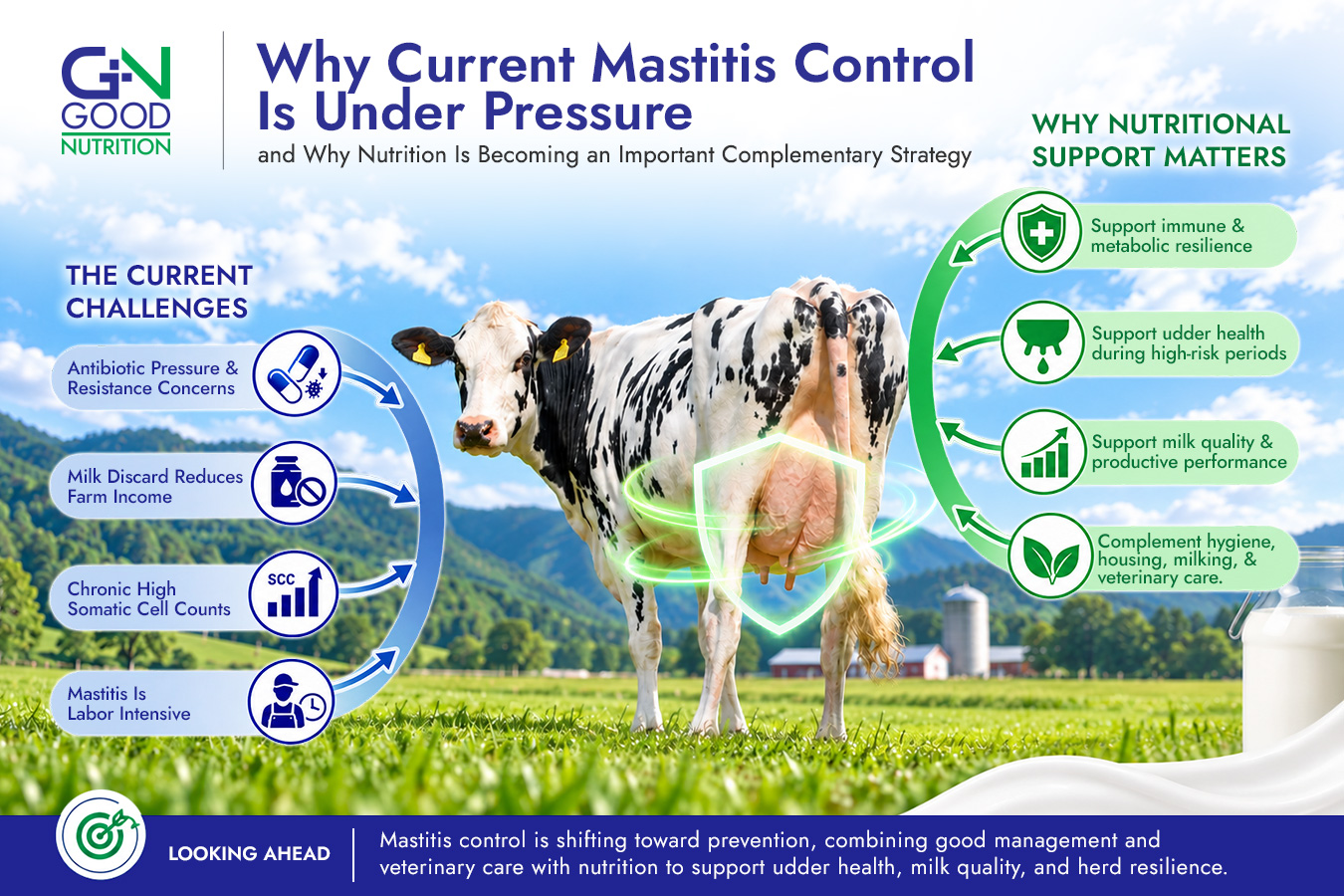
Why Current Mastitis Control Is Under Pressure and Why Nutrition Is Becoming an Important Complementary Strategy
Mastitis remains one of the costliest and most persistent diseases in dairy farming. Despite advances in hygiene, treatment, and herd management, recurring infections, elevated SCC, reduced milk quality, and profitability losses remain constant challenges.
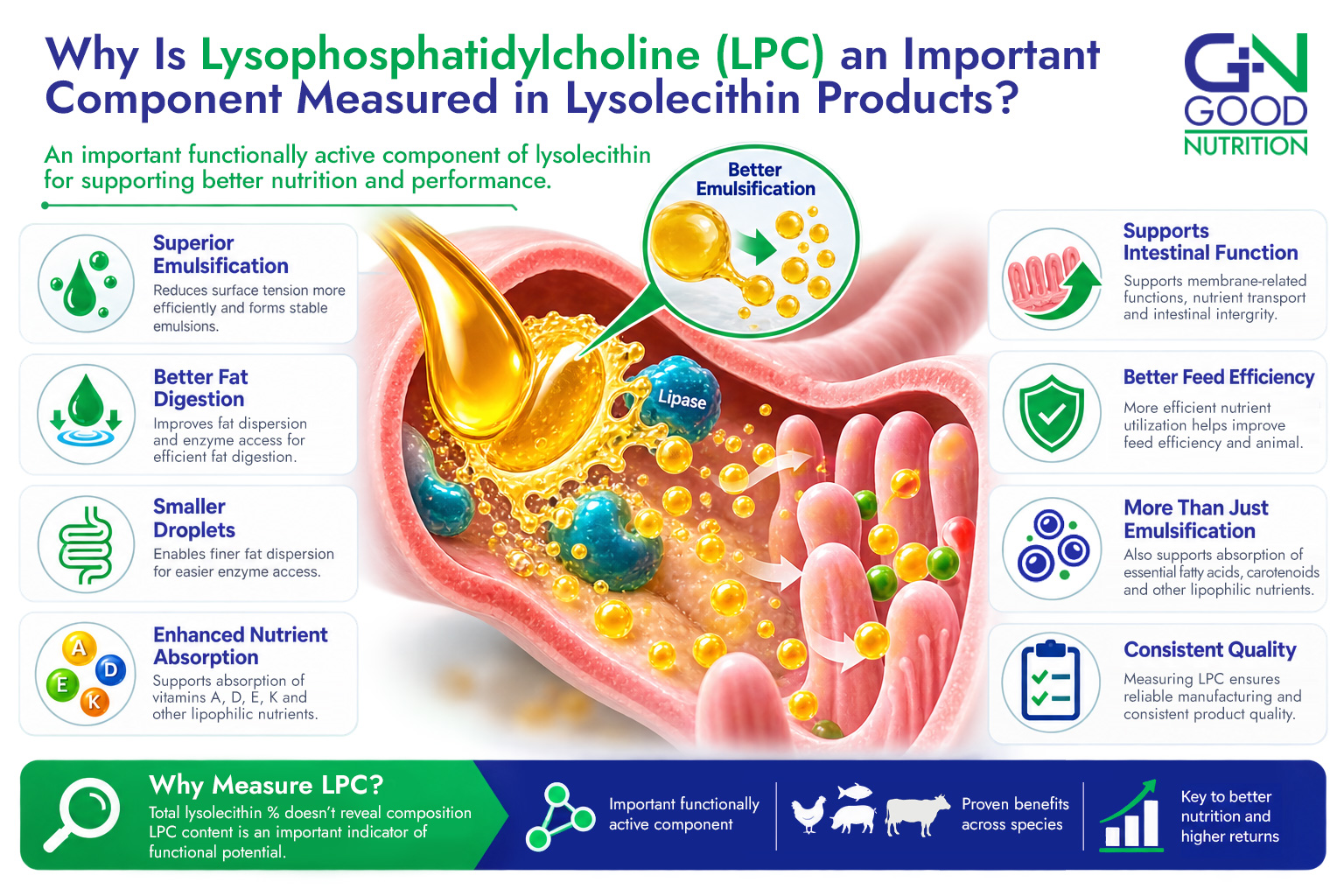
Why Is Lysophosphatidylcholine (LPC) an Important Component Measured in Lysolecithin Products?
When evaluating a lysolecithin product, lysophosphatidylcholine (LPC) is one important component to consider alongside the overall lysophospholipid profile, product consistency, physical form and relevant animal-performance data.