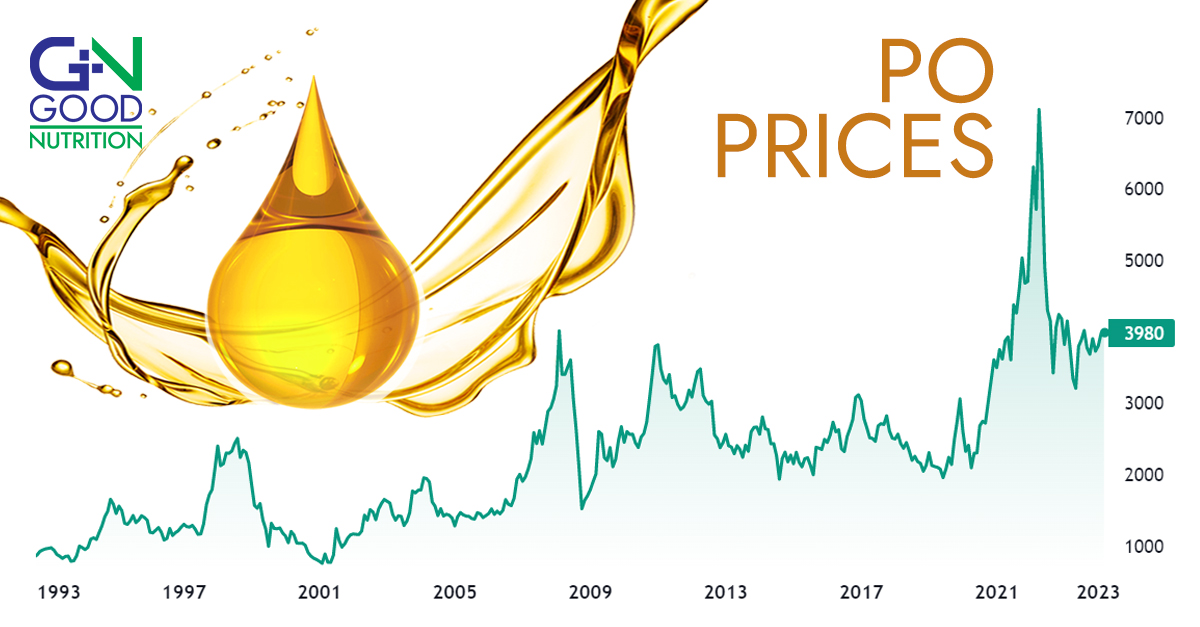
In the 1990’s, lipids (fats and oils) were cheap; about USD 300/metric ton (1990) therefore adding lipids to feed was a competitive option. However, with the global push towards sustainability, more lipids were used for manufacturing of biodiesels. As a result of using lipids for fuel, lipid prices sky rocketed and at its’ peak during Covid, it was around USD 1800/mt. It has since stabilised at USD 900/mt. However the future of lipid supply looks even tighter (less supply volume) as governments commit to higher biodiesel usage. Due to this trend, we expect lipid prices to keep increasing in the future. With this backdrop, GN Good Nutrition has manufactured lysolecithin to optimise the use of lipids in feed to help farmers reduce costs.



History of Fats and Prices
More articles
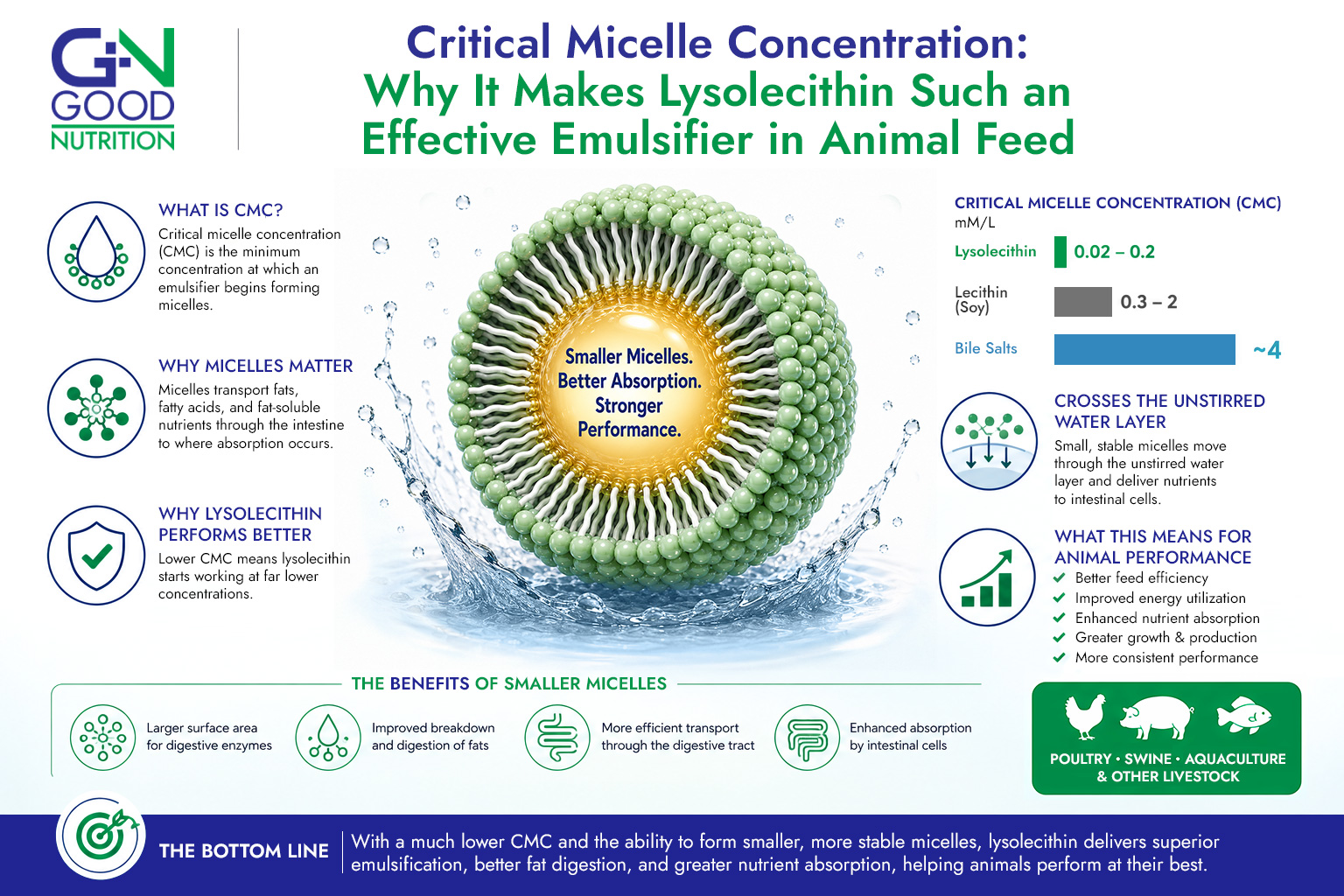
Critical Micelle Concentration: Why It Makes Lysolecithin Such an Effective Emulsifier in Animal Feed
Understanding critical micelle concentration (CMC) helps explain why lysolecithin can perform better than lecithin in some feeding situations, especially in young animals with immature digestive systems.