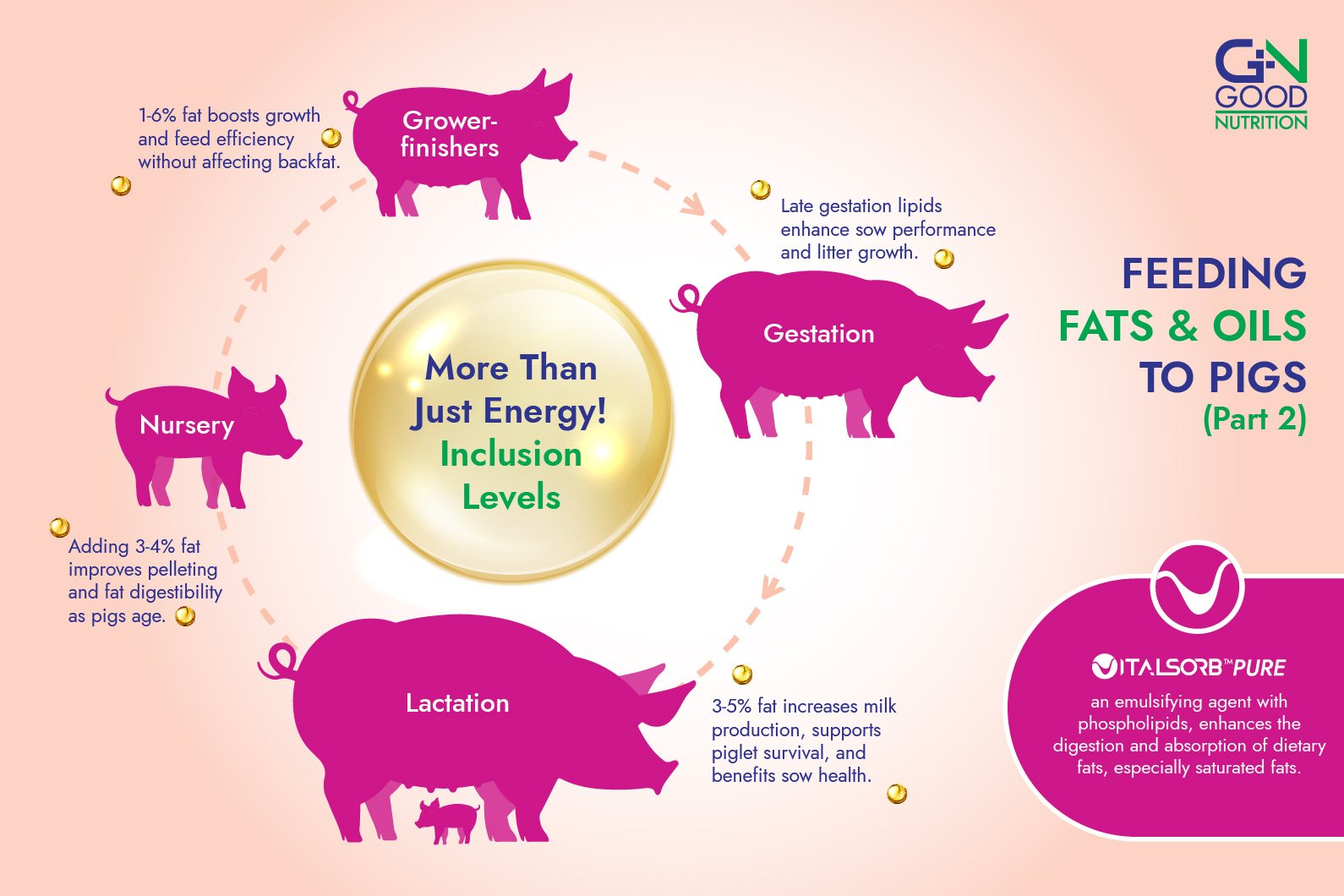
Fats and oils are typically added to pig diets at varying amounts depending on numerous conditions, however, some suggested inclusions may be as:
1. Nursery: Including 3-4% fat in pig starter feed enhances the pelleting process of diets with high levels of milk products. While young pigs have limited fat digestibility prior to 35 days, it does increase with age.
2. Grower-finishers: Incorporating 1-6% fat is used to improve average daily gain and optimise feed efficiency. Most modern lean genotypes respond well to high energy finisher diets, without negative effects on backfat.
3. Gestation: Supplementing lipids in late gestation minimises body condition loss and is beneficial for sow reproductive performance and achieving litter growth targets.
4. Lactation: Adding 3-5% can be used to increase dietary energy density leading to improved milk production and milk fat to support sow health and survival of piglets. Lipid supplementation can also increase sow longevity and shorten the weaning to estrous interval. Fats are insoluble in water and do not solubilise in the gastrointestinal tract. The more emulsified a fat is, the more digestible it will be, and consequently the more energy it will provide to the animal.
Vitalsorb™ Pure is an emulsifying agent containing phospholipid components to support oil-in-water emulsions for the superior digestion and absorption of dietary fats and oils, particularly saturated fats. The effective supplementation of fats and oils requires a balance between nutritional composition, production efficiency, and cost-effectiveness. It is recommended to consult with professionals and tailor supplementation strategies to individual farm requirements for optimal results.