There are many sources of fats and oils available for use in pig diets. Each source has a different fatty acid composition, resulting in varying digestibility and energy values.
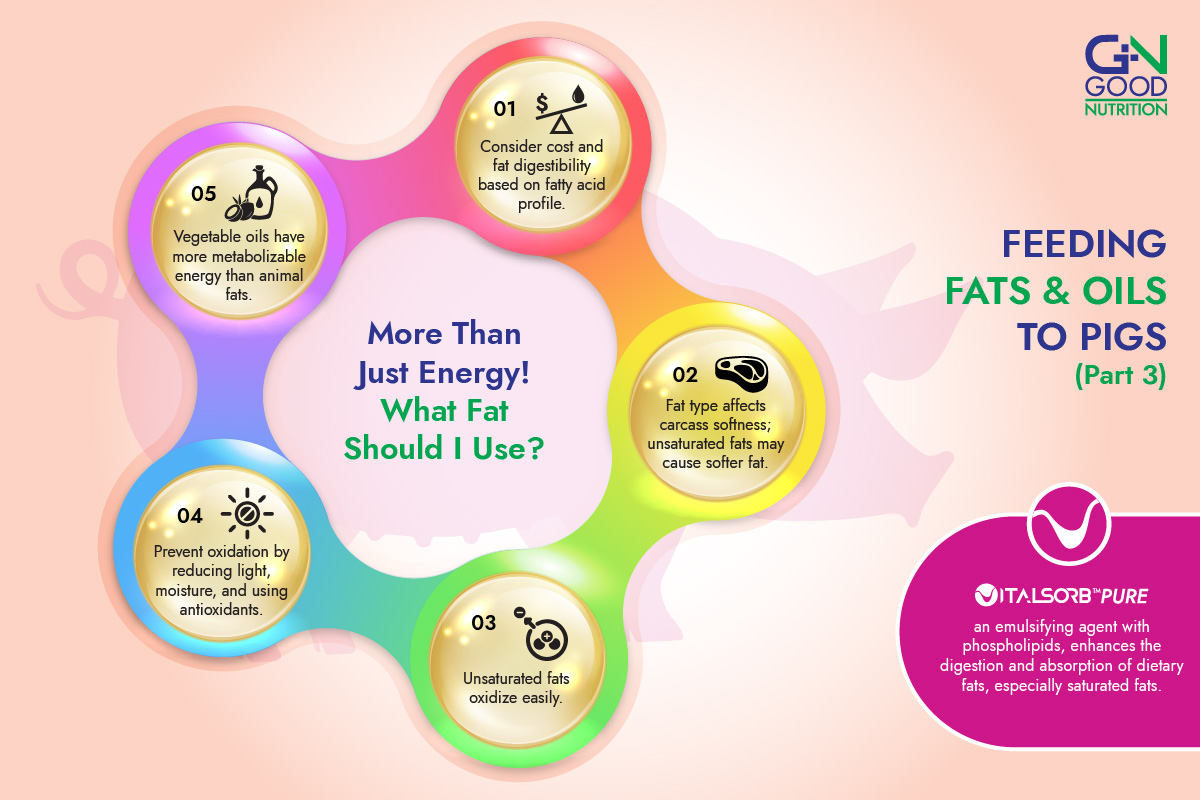
1. The choice of a lipid should consider not only the price but the fat digestibility, which is influenced by its fatty acid profile.
2. The type of fat fed to influences the fatty acid composition of the carcass fat. Diets rich in unsaturated fats lead to a higher degree of unsaturation in the fat tissue, which can result in undesirable soft carcass fat.
3. Unsaturated fatty acids are more prone to oxidation.
4. Measures to reduce oxidation of fats and oils during storage at the feed mill include minimizing exposure to light, moisture and storing in cool environments. Antioxidants such as ethoxyquin, BHA and BHT can reduce oxidation, however, they cannot reverse oxidation once it occurs.
5. Vegetable oils are higher in metabolisable energy than animal fats. Fats are insoluble in water and do not solubilise in the gastrointestinal tract. The more emulsified a fat is, the more digestible it will be, and consequently the more energy it will provide to the animal.
Vitalsorb™ Pure is an emulsifying agent containing phospholipid components to support oil-in-water emulsions for the superior digestion and absorption of dietary fats and oils, particularly saturated fats. Understanding the differences between fat and oils sources is essential for proper decision making. It is recommended to consult with professionals and tailor supplementation strategies to individual farm requirements for optimal results.