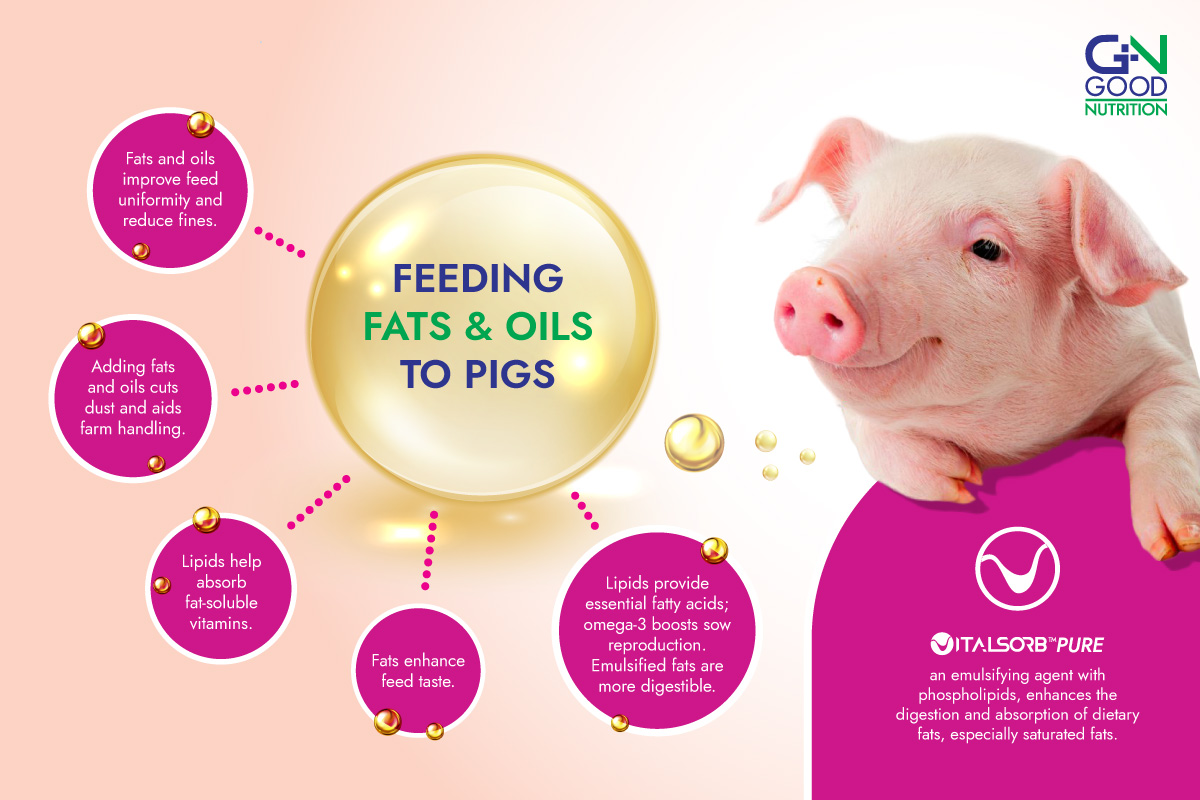
The major reason for feeding lipids (fats and oils) is for their energy density, however, other nutritional benefits are also well recognised including:
1. Fats and oils bind mash mixtures, making the feed more homogeneous and less susceptible to segregation. They can also reduce fines within pelleted diets.
2. The addition of fat and oil in feed reduces the formation of dust, not only during feed milling, but also improves on-farm handling, which may reduce the risk of respiratory issues.
3. Lipids supports the absorption of fat-soluble vitamins (A, D, E, K) and carotenoids.
4. Addition of fats and oils can improve the palatability of feed.
5. Lipids are a source of essential fatty acids, primarily linoleic and α-linolenic acid. Although essential fatty acids in pig diets are generally not considered to be deficient, supplementation of omega 3 fatty acids can improve the reproductive performance of sows. Fats are insoluble in water and do not solubilise in the gastrointestinal tract. The more emulsified a fat is, the more digestible it will be, and consequently the more energy it will provide to the animal.
Vitalsorb™ Pure is an emulsifying agent containing phospholipid components to support oil-in-water emulsions for the superior digestion and absorption of dietary fats and oils, particularly saturated fats. The effective supplementation of fats and oils requires a balance between nutritional composition, production efficiency, and cost-effectiveness. It is recommended to consult with professionals and tailor supplementation strategies to individual farm requirements for optimal results.