


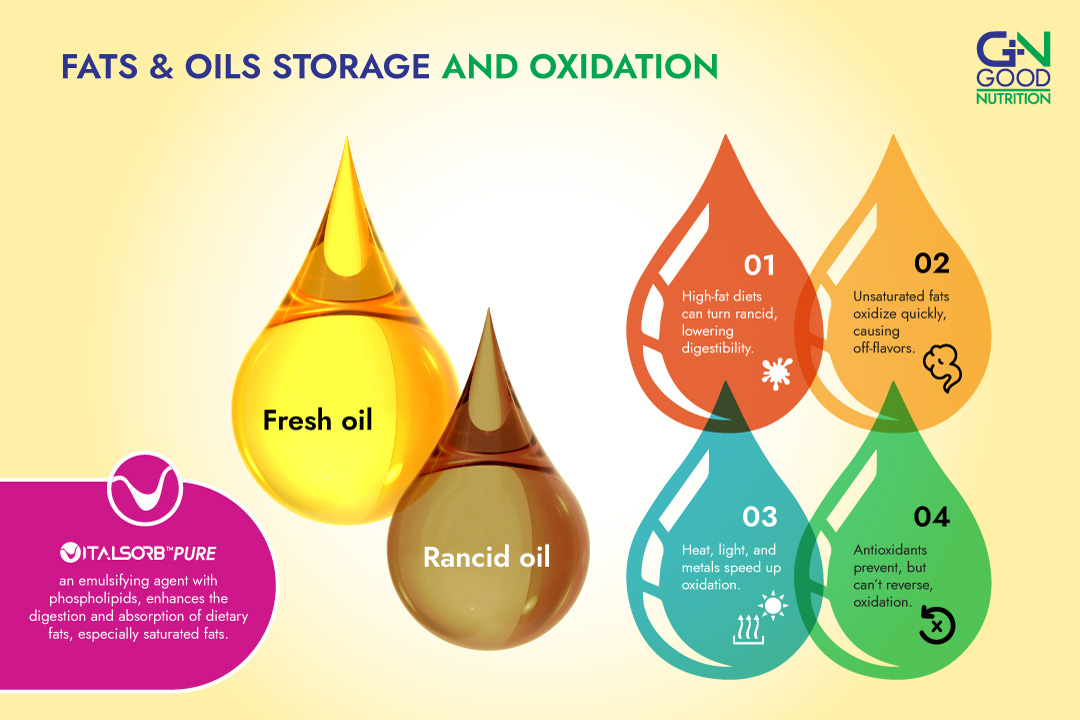
Diets with high fat content are prone to rancidity during prolonged storage or exposure to heat, impacting digestibility and palatability. Antioxidants mitigate oxidation issues, that is crucial in warm climates.
- Diets containing high levels of added fat are also predisposed to become rancid during prolonged storage or exposure to high temperatures. Oxidation can significantly reduce digestibility and palatability.
- Unsaturated fatty acids are more prone to oxidation, reducing the shelf life of the meat products and creating off-flavours and odors.
- Exposure to heat, light, oxygen, and transition metals (copper, iron, manganese and cobalt) during feed production, processing, and storage increases oxidation.
- Antioxidants can be added to fats and oils to reduce fat oxidation, control rancidity, maintain palatability, and prolong storage time, particularly in diets with high amounts of fat in hot climates. Polyunsaturated lipids, more commonly found in plant sources, such as soybean, canola and corn oils are more prone to oxidation. Note – antioxidants cannot reverse fat oxidation once it occurs.
Fats are insoluble in water and do not solubilise in the gastrointestinal tract. The more emulsified a fat is, the more digestible it will be, and consequently the more energy it will provide to the animal. Vitalsorb™ Pure is an emulsifying agent containing phospholipid components to support oil-in-water emulsions for the superior digestion and absorption of dietary fats and oils, particularly saturated fats. It is recommended to consult with professionals to ensure the quality of fats and oils in feed.

