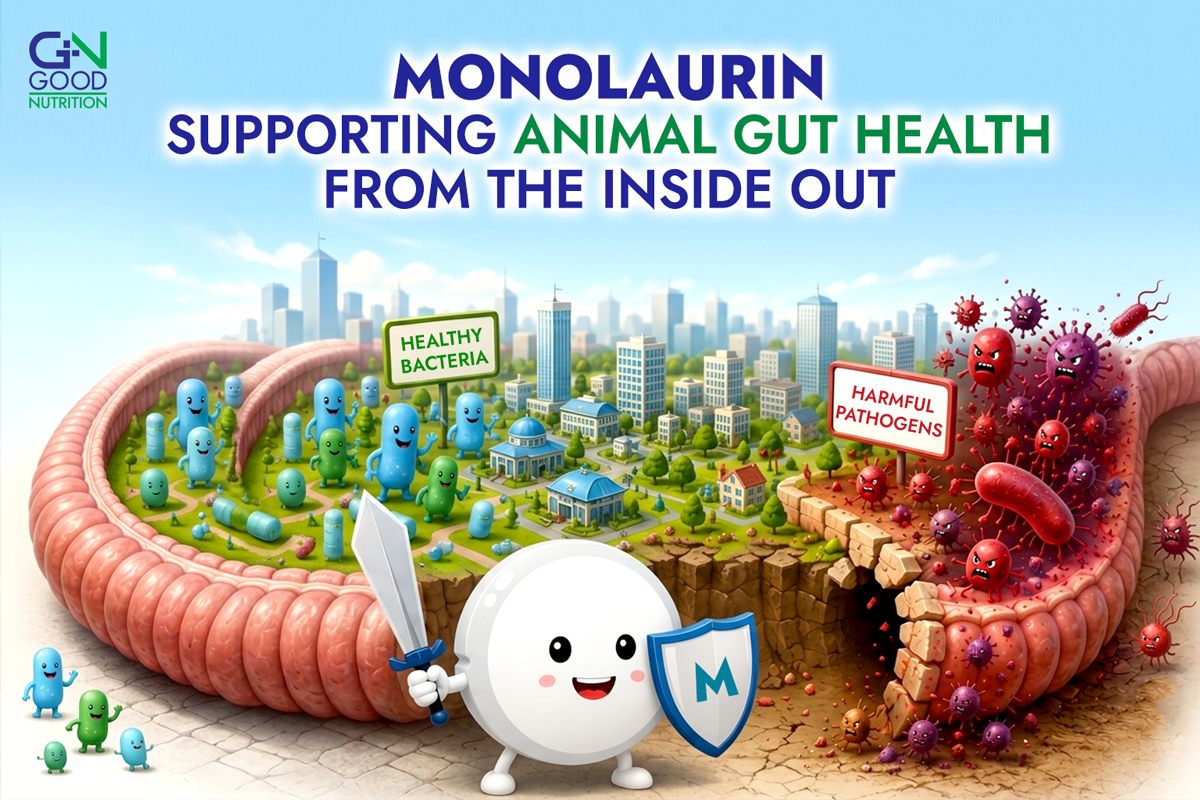
Imagine a farm animal’s gut as a busy city.
Most of the microbes living there are helpful citizens that help digest feed and support health. But sometimes harmful bacteria move in and cause trouble.
This is where *monolaurin* comes in.
Monolaurin is a natural compound derived from lauric acid, a fatty acid found in coconut oil and palm kernel oil. It has been studied for its ability to disrupt the outer membranes of certain harmful bacteria, viruses, and other microorganisms.
Think of it as a security guard that helps keep unwanted visitors under control.
By helping reduce microbial challenges, monolaurin can support:
✅ Gut health
✅ Natural immune defenses
✅ Feed efficiency
✅ Animal resilience during periods of stress
For young animals, this can be especially important because their immune systems and digestive systems are still developing.
The goal is not to “fight everything.” A healthy gut contains many beneficial microbes that animals need. Instead, monolaurin helps create a more balanced environment where animals can focus more energy on growth, production, and overall performance.
A Simple Analogy
If an animal’s body were a castle:
* The immune system is the army.
* The gut is the castle wall.
* Harmful pathogens are invaders.
* Monolaurin helps weaken the invaders before they can cause major damage.
This allows the animal’s natural defenses to do their job more effectively.
Why Nutritionists Find It Interesting
In modern animal production, there is increasing focus on supporting animal health through nutrition rather than relying solely on treatments after problems occur.
Monolaurin is one example of how a naturally derived ingredient can help support animals from the inside out, contributing to healthier guts, stronger defenses, and more resilient livestock.
After all, healthier animals are not just better performers. They are more comfortable, more productive, and better equipped to handle the challenges of modern farming.
*Fun fact:* Monolaurin may be tiny, but it works at the microscopic level where many of the biggest animal health challenges begin.