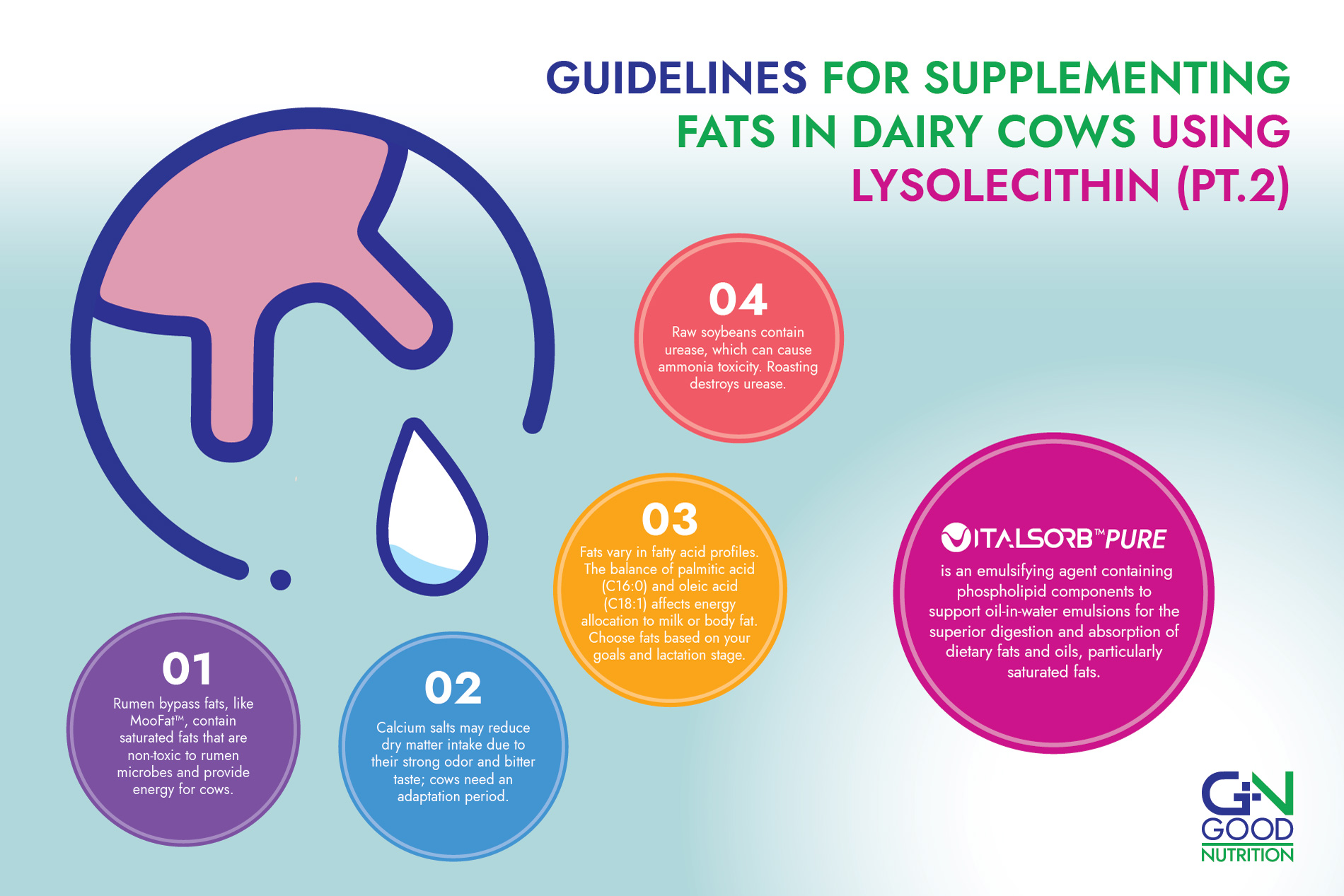
Supplementing fats needs careful consideration due to their high cost and potential negative impacts:
1. Because rumen bypass fats contain saturated fats (for example, MooFat™ range of bypass fats), they are not toxic to the rumen microbes and pass through the rumen unaltered, providing an energy source for the cow.
2. Calcium salts may depress dry matter intake, possibly due to their pungent odor and slightly bitter taste. Cows that have not had previous exposure to these fats may require an adaptation period.
3. Not all fats are the same, as their fatty acid profiles differ. They should be selected based on individual fatty acids supplied by a fat source, specifically the balance of the saturated fat, palmitic acid (C16:0) and the unsaturated fat oleic acid (C18:1). Increased palmitic acid leads to increased partitioning of energy to milk, primarily through increased milk fat production (milk has a relative high concentration of C16:0), whereas stearic acid directs energy toward body fat reserves. The best by-pass fat for dairy cows is therefore dependent upon your aim and stage of lactation.
4. Raw soybeans are a good source of fat, however, they contain urease, an enzyme that breaks down urea to ammonia in the rumen, which could cause ammonia toxicity. Roasting soybeans is recommended to destroy the urease.
Vitalsorb™ Pure is an emulsifying agent containing phospholipid components to support oil-in-water emulsions for the superior digestion and absorption of dietary fats and oils, particularly saturated fats.