
Guidelines For Rearing Calves With Milk Replacers Part 4

Guidelines for rearing calves with milk replacers using lysolecithin from GN Good Nutrition.

Calf feeding and management practices have been shown to significantly impact lifetime performance, therefore they should be considered as an investment, not as a cost.

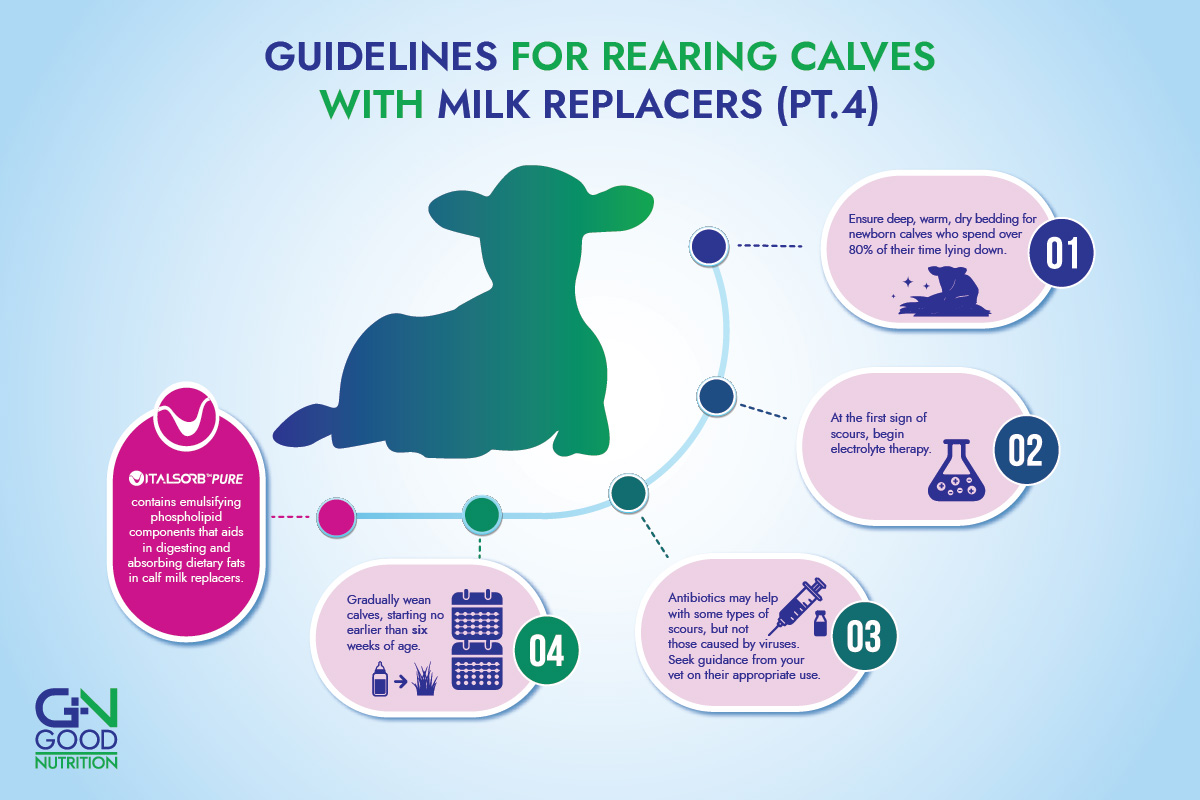
1. A new-born calf will spend over 80% of their time lying down, therefore it is important to always provide a deep, warm, dry bedding.

2. At the first sign of scours, begin electrolyte therapy.

3. Antibiotics may be indicated with scours, but many forms of scours are caused by microbes such as viruses which are not controlled by antibiotics. Consult your veterinarian for guidance on the use of antibiotics in scouring calves.

4. Wean no earlier than six weeks of age, in a step-down approach.

Vitalsorb™ Pure is an emulsifying agent containing phospholipid components to support oil-in-water emulsions for the superior digestion and absorption of dietary fats and oils, particularly saturated fats.


More articles
Feeding Fats to Broiler Chickens Plant versus Animal Lipids
Feeding Fats and Oils to Broiler Chickens: Effect on Carcass Quality – Plants Versus Animal Lipids
The type and source of dietary fatty acids have a significant impact on the carcass quality of broiler chickens. Know about the effects of saturated and unsaturated fats for broilers chickens.
Feeding-Fats-&-Oils-to-Broiler-Chickens-Effect on Carcass-Quality
Feeding Fats And Oils To Broiler Chickens – Effect On Carcass Quality
In broiler production, fats and oils are often seen simply as concentrated sources of energy but their impact reaches much further. The right balance of lipids can enhance carcass quality, optimize yield, and even influence meat composition and consumer satisfaction.