When evaluating a lysolecithin product, lysophosphatidylcholine (LPC) is one important component to consider alongside the overall lysophospholipid profile, product consistency, physical form and relevant animal-performance data.
Many feed additives are marketed simply as “lysolecithin”, but lysolecithin products can differ substantially in composition, source, processing, physical characteristics and intended application. LPC concentration is a useful compositional and quality-control indicator, but it should be interpreted together with the full lysolecithin profile, the feed formulation, application conditions, and animal-performance evidence. This is why researchers, nutritionists, and quality manufacturers pay close attention to LPC levels rather than focusing only on the total amount of lysolecithin when comparing products.
Understanding why LPC matters begins with understanding what happens during the production of lysolecithin.
Lysolecithin Is a Mixture, Not a Single Ingredient
Lysolecithin is generally produced by enzymatic treatment of lecithin using phospholipase enzymes. During hydrolysis, phospholipase removes one fatty acid from some phospholipid molecules, producing lysophospholipids and changing the overall phospholipid profile.
Depending on the lecithin source and enzymatic process, lysolecithin may contain varying proportions of:
- Lysophosphatidylcholine (LPC)
- Lysophosphatidylethanolamine (LPE)
- Lysophosphatidylinositol (LPI)
- Lysophosphatidic acid (LPA)
- Residual phospholipids and other lipid fractions
Each of these molecules has unique biological properties, but LPC has consistently received the greatest scientific attention because of its superior surface-active characteristics and its significant role in lipid digestion and nutrient absorption.
For this reason, the LPC concentration is often used as one compositional marker when assessing the quality and consistency of lysolecithin products.
Why LPC Is Important
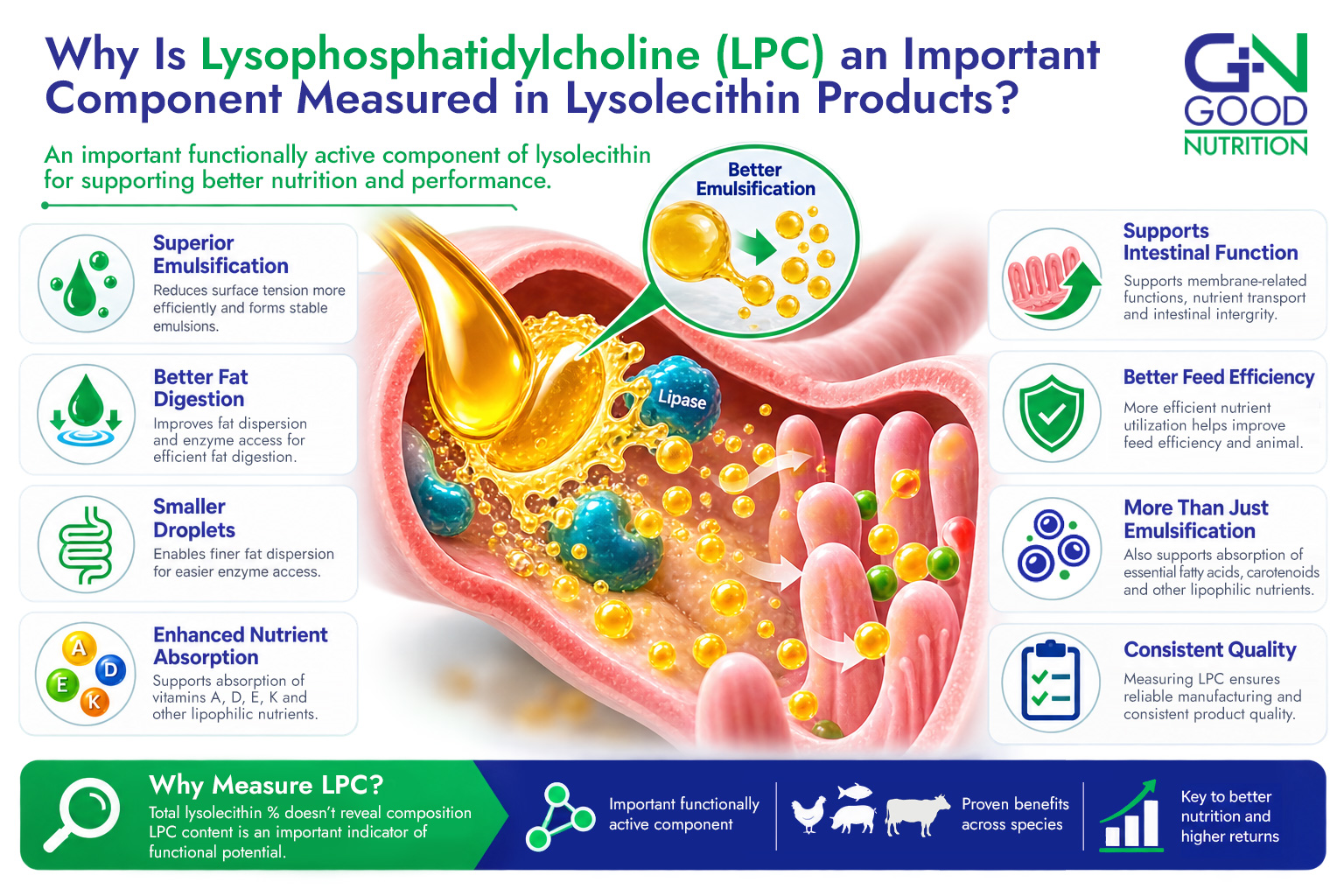
LPC possesses a unique molecular structure that gives it useful surface-active properties and enables it to contribute to lipid emulsification. Unlike conventional phospholipids such as phosphatidylcholine, LPC contains one fatty acid chain rather than two. This seemingly small structural difference dramatically changes how the molecule behaves at the interface between water and fat.
As part of a lysolecithin system, LPC can contribute to:
- Supporting the emulsification of dietary fats and oils
- Interacting at oil-water interface due to its amphiphilic structure
- Participating in mixed-micelle systems with bile salts and products of lipid digestion
- Helping maintain the solubility and transport of lipid-digestion products in the intestinal environment
- Supporting the intestinal handling of fats and other lipophilic nutrients
Together, these properties may support more efficient digestion and absorption of dietary lipids, helping animals make better use of energy supplied by the diet.
Mixed Micelles Support Lipid Absorption
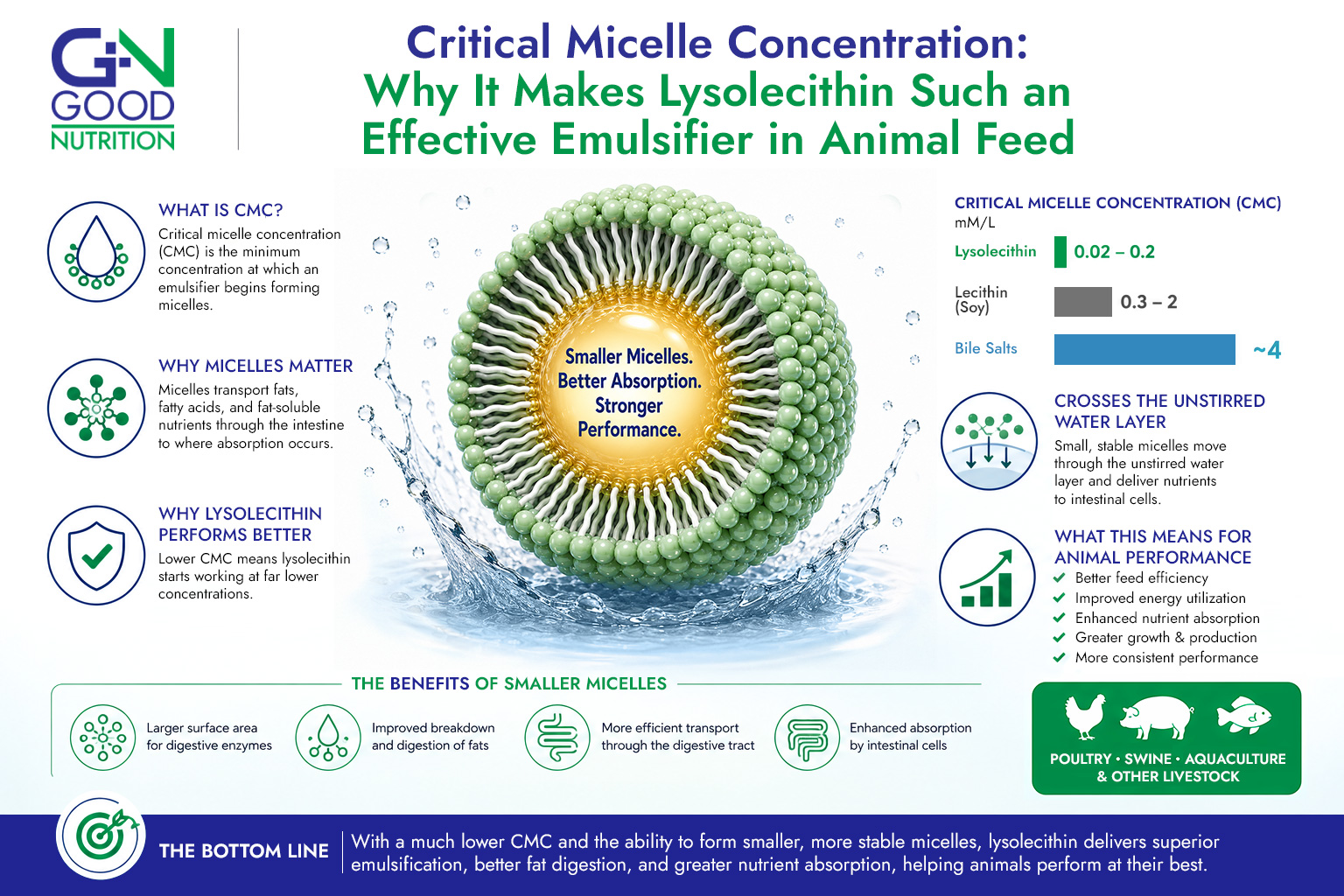
One of LPC’s greatest advantages is its ability to participate in mixed-micelle systems formed in the small intestine Mixed micelles are small lipid-containing structures formed from bile salts, fatty acids, monoglycerides, phospholipids, lysophospholipids, cholesterols, and other lipid-digestion products.They help transport these lipids through the aqueous intestinal environment e towards the absorptive surface. The composition and stability of mixed micelles can influence the solubilization and intestinal availability of lipid-digestion products.
Research has reported that LPC has a low critical micelle concentration (CMC), approximately 0.02 to 0.2 mM/L, compared with around 4 mM/L for selected bile salts. This property supports its role in intestinal mixed-micelle formation and efficient lipid utilization.
By supporting emulsification and mixed micelle formation, lysophospholipids may help maintain conditions favorable for continued lipid digestion and absorption.
This is one of the main reasons lysolecithin supplementation has been associated with improved fat utilization across poultry, swine, ruminants, and aquaculture diets; however, the response depends on species, production stage, dietary fat source, and feeding conditions. .
More Than Just Fat Digestion
Although LPC is widely recognized for improving fat digestion, its benefits extend beyond emulsification alone.
Scientific studies have demonstrated that LPC may also help improve the absorption of:
- Fat-soluble vitamins (A, D, E, and K)
- Essential fatty acids
- Carotenoids
- Other lipophilic nutrients
Improved nutrient absorption means animals are better able to utilize the nutrients already present in the diet, it may contribute to better feed efficiency without increasing feed intake.
LPC and Intestinal Function: An Emerging Area
An additional reason LPC receives so much attention is its interaction with the intestinal membrane.
Because LPC is structurally related to naturally occurring phospholipids found in cell membranes, it may interact with the intestinal lining in ways that influence nutrient transport and intestinal function.
Research suggests that lysophospholipids, including LPC, may help:
- Support membrane fluidity and cellular function
- Influence nutrient transport across intestinal cells
- Support intestinal integrity
- Promote efficient digestion and absorption
While these mechanisms continue to be studied, they may provide an additional explanation for performance responses observed with lysolecithin products under appropriate feeding conditions.
Why Total Lysolecithin Percentage Is Not the Full Picture
Two products may both claim to contain “50% lysolecithin,” yet perform very differently in the field.
Total lysolecithin percentage does not fully reveal the composition of the lysophospholipids within the product.
One product may contain a higher proportion of LPC, while another may contain different proportions of other lysophospholipid fractions.
Because LPC contributes to the surface-active and emulsifying characteristics of lysolecithin, products with identical total lysolecithin percentages may not necessarily produce the same practical response.
This is why reputable manufacturers may specify LPC content, together with other relevant product specifications, rather than relying solely on total lysolecithin claims.
Measuring LPC Supports Quality Control
Feed manufacturers require products that deliver consistent quality from batch to batch.
Measuring LPC helps support:
- Consistent raw material quality
- Reliable manufacturing standards
- Predictable product performance
- Better formulation accuracy
Rather than treating lysolecithin as a generic ingredient, measuring LPC provides a quantifiable indicator of product composition and functional quality.
Together with relevant animal-performance data, this gives nutritionists greater confidence when formulating diets and evaluating return on investment.
What Should Nutritionists Look For?
When comparing lysolecithin products, asking only “How much lysolecithin is included?” is no longer enough.
More useful questions include:
- What is the LPC concentration and overall lysophospholipid profile?
- How is the LPC measured?
- Is the LPC content consistent between production batches?
- Is the product supported by relevant animal-performance data?
These questions help distinguish high-quality, scientifically formulated products from those that simply carry the lysolecithin label.
A Practical Perspective
Not all lysolecithin products deliver the same practical response. .
Lysophosphatidylcholine (LPC) is measured because it is an important functional component within lysolecithin. Its unique structuresupports emulsification and participation in mixed-micelle systems, which can help support nutrient absorption and efficient fat digestion.
By considering LPC together with total lysolecithin content, the overall lysophospholipid profile, and relevant animal-performance data, nutritionists and feed manufacturers gain a clearer understanding of a product’s functional potential.
As animal nutrition continues to emphasize feed efficiency, nutrient utilization, and return on investment, LPC remains a meaningful compositional and quality indicator when selecting a lysolecithin feed additive.
Source:
https://scispace.com/pdf/lysolecithin-but-not-lecithin-improves-nutrient-4r4uf85t8i.pdf.