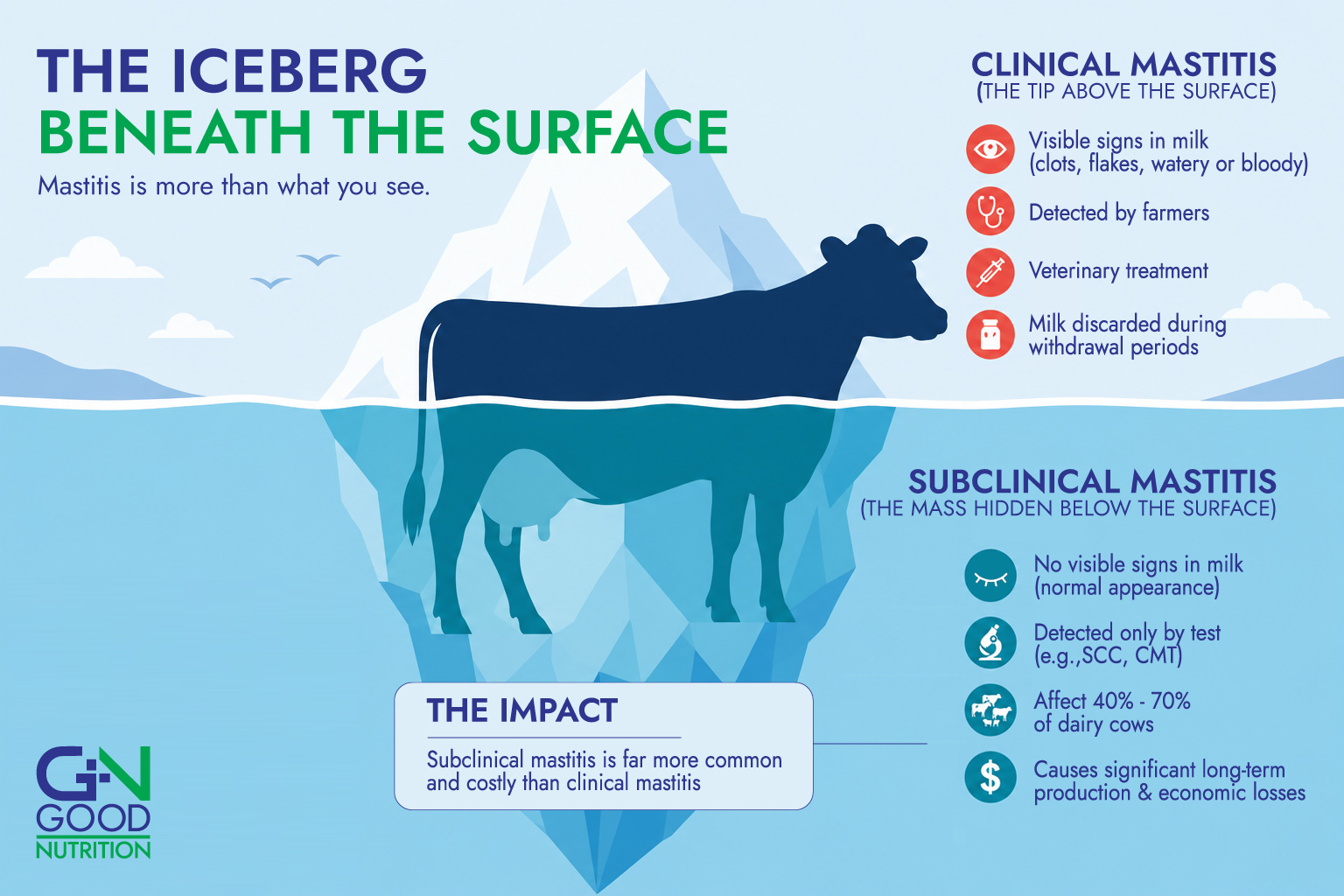
Mastitis remains one of the most costly and persistent diseases affecting dairy farms worldwide. Despite decades of improvements in milking hygiene, antibiotic treatments, and herd management, many producers continue to struggle with recurring infections, elevated somatic cell counts (SCC), reduced milk quality, and declining profitability.
The challenge today is not that mastitis cannot be treated. The challenge is that traditional approaches are increasingly being placed under pressure by changing regulations, rising costs, labor shortages, and growing concerns surrounding antimicrobial resistance.
As a result, dairy producers are beginning to look beyond treatment alone. Nutritional strategies that strengthen udder health and improve the cow’s natural resilience are becoming an important part of long-term mastitis management.
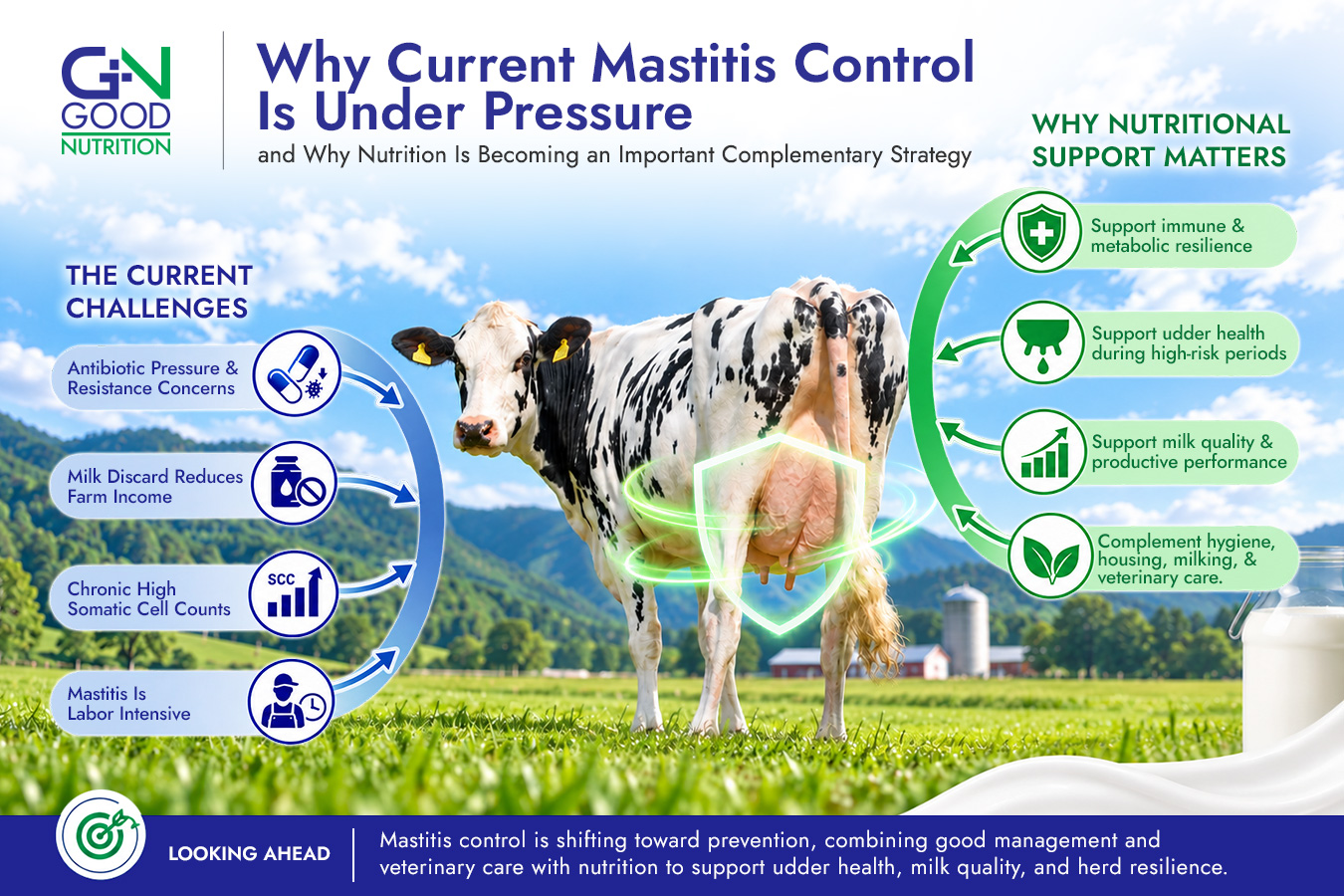
The Current Challenges Facing Dairy Farms
1. Antibiotic Pressure and Resistance Concerns
For many years, antibiotics have been one of the primary tools used to control mastitis. While they remain an important part of veterinary medicine, increasing global attention on antimicrobial resistance (AMR) is changing how antibiotics are used.
Many countries now encourage more responsible antibiotic use, especially in food-producing animals. This means dairy farmers are expected to reduce unnecessary treatments while maintaining animal health and milk quality.
Inappropriate or repeated antimicrobial use can contribute to antimicrobial-resistance concern, reinforcing the need for responsible, veterinary-guided use. Consumers are increasingly aware of these issues and are demanding milk that is produced using responsible antimicrobial practices.
The industry is therefore shifting toward prevention rather than relying solely on treatment after infection has already occurred.
2. Milk Discard Reduces Farm Income
One of the hidden costs of mastitis is discarded milk.
Whenever a cow receives antibiotic treatment, her milk often cannot be sold until the withdrawal period has ended. Even though the cow continues producing milk, that milk becomes an economic loss to the farm.
The financial impact includes:
- Lost milk sales
- Additional treatment costs
- Increased labor
- Reduced production efficiency
For farms with frequent mastitis cases, these losses accumulate quickly and significantly reduce overall profitability.
Preventing infections before treatment becomes necessary helps preserve milk yield while reducing unnecessary waste.
3. Chronic High Somatic Cell Counts (SCC)
Somatic Cell Count is one of the most important indicators of udder health.
A consistently elevated SCC often indicates that inflammation or infection remains present within the udder, even when no obvious clinical signs are visible.
Chronic high SCC can result in:
- Lower milk quality
- Reduced milk production
- Lower processing performance
- Financial penalties from milk processors
- Increased risk of future clinical mastitis
Many farms experience recurring SCC problems despite following standard hygiene protocols. This highlights the need to review the full herd-health program, including milking management, housing, transition-cow management, nutrition, and veterinary oversight. Improving the cow’s own immune function and resilience has become an increasingly important part of reducing chronic SCC.
4. Mastitis Is Labor Intensive
Managing mastitis requires significant time and manpower.
Every case involves multiple additional tasks, including:
- Identifying affected cows
- Separating infected animals
- Administering treatments
- Recording treatments
- Discarding milk
- Monitoring recovery
- Cleaning and disinfecting equipment
On farms already facing labor shortages, these additional responsibilities place considerable pressure on daily operations.
Reducing the number of mastitis cases helps improve overall labor efficiency while allowing staff to focus on other important areas of herd management.
Why Additional Nutritional Support Matters
Excellent hygiene, proper milking procedures, vaccination programs, and veterinary care remain the foundation of mastitis control.
However, today’s production systems place considerable stress on dairy cows.
High milk production, metabolic demands, heat stress, transition periods, and environmental challenges can all reduce the cow’s ability to defend herself against invading pathogens.
This is where nutrition becomes an important complementary strategy.
Rather than replacing existing mastitis management programs, nutritional interventions aim to strengthen the cow’s natural defenses and improve resilience from within.
Supporting immune function, gut health, antioxidant status, and nutrient utilization may help strengthen overall resilience and support udder health as part of a complete herd-health program.
Prevention Alongside Timely Treatment
Modern dairy farming increasingly focuses on prevention.
Instead of waiting until infection occurs, producers are investing in nutritional strategies that help cows remain healthier throughout lactation.
Preventive nutritional approaches may help:
- Support immune and metabolic resilience
- Support udder health during high-risk periods, particularly transition and early lactation
- Support milk quality and productive performance
- Complement hygiene, milking routines, housing, and veterinary-led mastitis-control programs
These benefits complement existing herd health programs rather than replacing veterinary treatments when they are required.
Nutrition Is Becoming a Strategic Tool
Advances in animal nutrition have introduced a range of functional feed additives designed to support dairy cow health.
Nutritional programs may include ingredients intended to support immune function, gut integrity, nutrient absorption, antioxidant status, and metabolic efficiency.
By improving the cow’s ability to cope with production stress and pathogen exposure, nutritional support can contribute to better long-term herd performance.
The goal is no longer simply treating mastitis. It is building cows that are naturally more resilient.
Looking Ahead
Mastitis will likely remain one of the dairy industry’s greatest challenges. However, the way producers manage the disease is evolving.
Increasing antibiotic pressure, milk losses, chronic SCC issues, and labor constraints are encouraging farms to adopt broader, more proactive strategies.
Nutrition is increasingly recognised as an important complementary pillar alongside good management, biosecurity, milking hygiene, and veterinary care.
Modern dairy systems can benefit from nutritional strategies designed to support udder resilience, milk quality, and productivity throughout their lactation.
By combining sound management with targeted nutritional support, dairy producers can move beyond simply treating mastitis and begin building healthier, more resilient herds for the future.
Nutritional strategies should complement, NOT REPLACE, good milking hygiene, appropriate housing, routine monitoring, veterinary diagnosis, and treatment protocols.