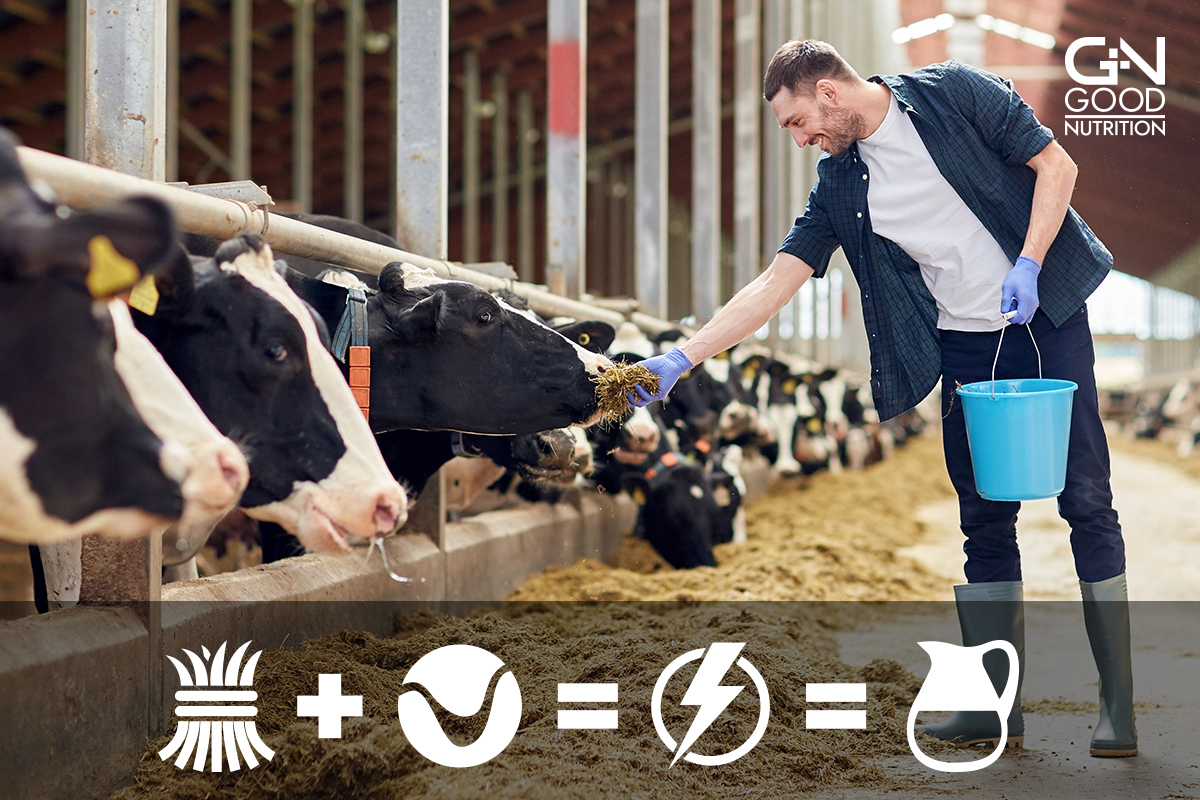
Although the major reason for feeding fat is for its energy density, other benefits are well recognised:
Energy is the most critical nutrient affecting milk production of lactating dairy cows. Fats are commonly supplemented to dairy cow rations to increase dietary energy density (fats contain approximately 2.25 times more energy than cereals, and don’t add to the acid load in the rumen), to improve milk production and milk fat content, and energy balance to benefit body condition and hence fertility. Replacing carbohydrate sources of energy with fat also reduces the production of methane, a potent greenhouse gas.
Furthermore, the heat increment associated with digestion and metabolism of fat is much lower than other feed ingredients, helping to combat heat stress. Fats aid in the absorption of fat-soluble nutrients, such as vitamins A, D, E and K, and carotenoids.
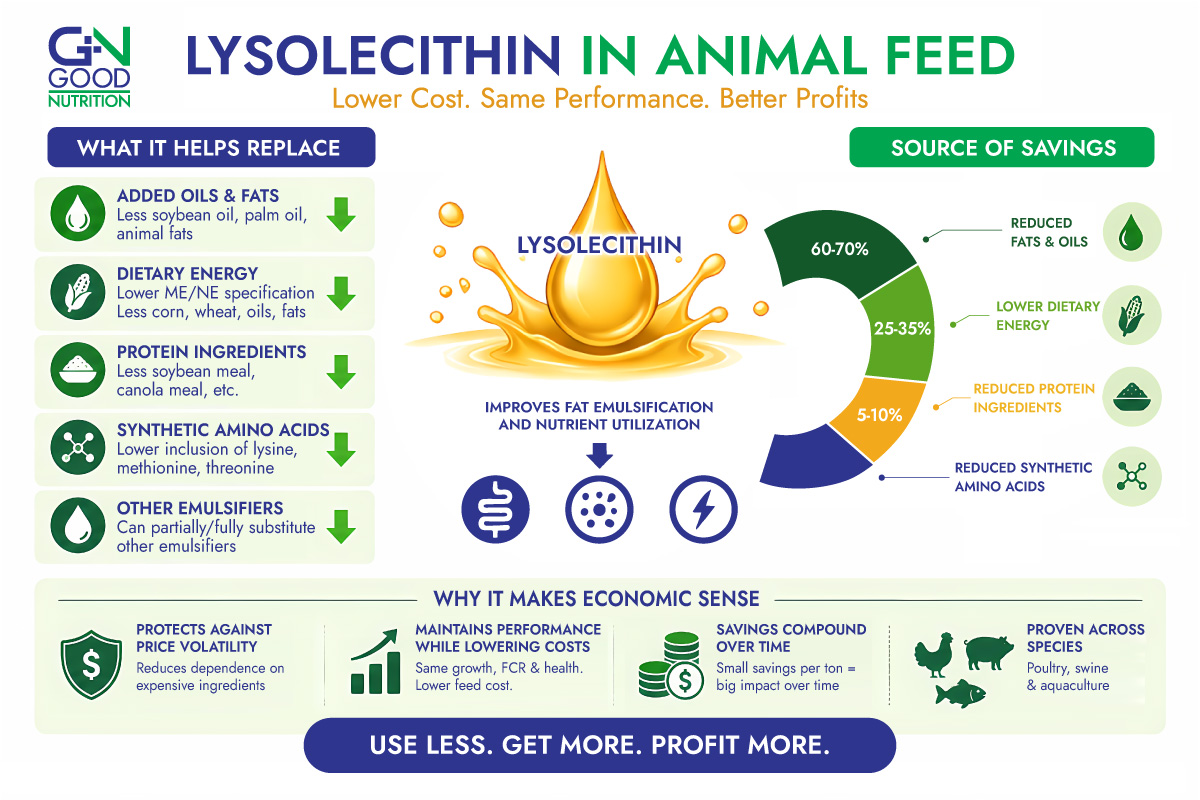
However, with the recent high prices of fats, strategies to improve cost-effectiveness needs to be considered, particularly as prices are expected to remain historically high.
Vitalsorb™ Pure is an emulsifying agent containing phospholipid components to support oil-in-water emulsions for the superior digestion and absorption of dietary fats and oils, particularly saturated fats.