Heat stress results in major economic losses to the pig industry due to reduced feed intakes and subsequent decrease in performance. With heavier pigs heat stress is more pronounced and occurs at lower temperatures, as the optimum temperature for these animals is lower.
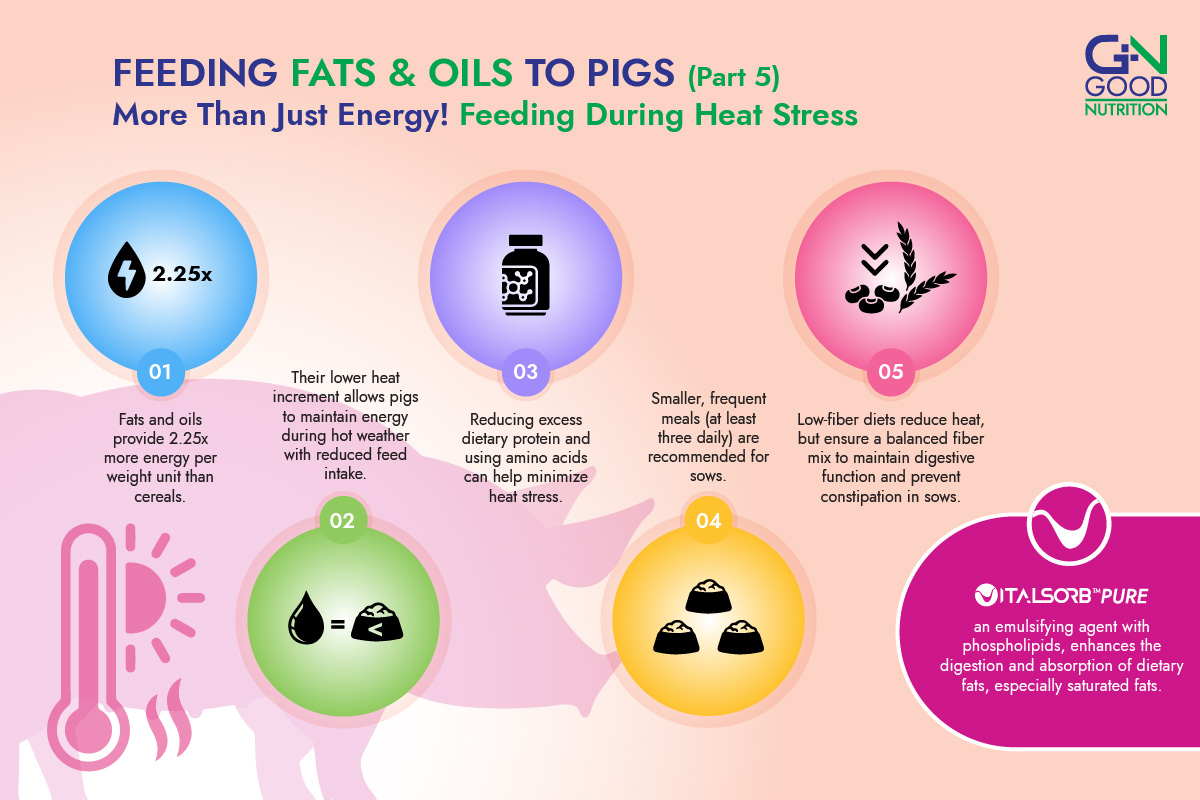
1. Compared to cereals, fats and oils offer approximately 2.25 times more energy per weight unit.
2. The heat increment associated with digestion and metabolism of fats and oils is much lower than proteins and carbohydrates. This allows pigs fed diets with added fat (typically 2-6% of the diet) to continue to consume large amounts of energy during hot weather when feed intake is normally reduced, helping to maintain performance.
3. Excess protein is deaminated and excreted requiring energy and generating heat. Relief from heat stress also includes reducing excess dietary protein, using amino acids, while maintaining ideal amino acid balances.
4. Smaller and more frequent meals is recommended to mitigate heat stress in sows. Depending on labour availability, aim to feed sows at least three times a day.
5. Preferably use feed with less fiber since fiber fermentation releases considerable heat increment. Nevertheless, a good balance of fermentable and insoluble fiber fractions should be maintained to ensure proper functionality of the digestive system. Care should be taken to avoid constipation in sows to compensate for the reduction in dietary fiber. Fats are insoluble in water and do not solubilise in the gastrointestinal tract. The more emulsified a fat is, the more digestible it will be, and consequently the more energy it will provide to the animal.
Vitalsorb™ Pure is an emulsifying agent containing phospholipid components to support oil-in-water emulsions for the superior digestion and absorption of dietary fats and oils, particularly saturated fats. The effective supplementation of fats and oils requires a balance between nutritional composition, production efficiency, and cost-effectiveness. It is recommended to consult with professionals and tailor supplementation strategies to individual farm requirements for optimal results.